
Ultrasonic technologies 'make waves' for process equipment cleaning
Jon Lowy | August 31, 2025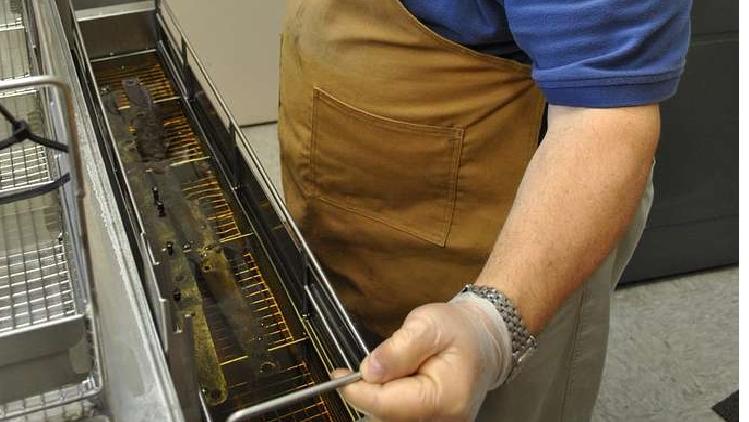
Ultrasonic cleaning is a highly efficient and adaptable method for maintaining and cleaning process equipment. The technology keenly addresses buildup, contamination and hygiene issues in non-destructive and low-to-zero chemical agent ways.
Instead, it uses high-frequency sound waves, typically in the range of 20 kHz to 400 kHz, to generate micro-cavitation in a fluid cleaning medium. When these bubbles collapse, cavitation produces intense local shock effects, dislodging contaminants, even in hard-to-access places.
This non-invasive and highly penetrative cleaning method has proven beneficial for cleaning delicate components, precision machinery and intricate components. It offers unique advantages over conventional techniques such as chemical soaks, manual or machine scrubbing and pressure washing.
How ultrasonic cleaning works
At the core of ultrasonic cleaning is instantaneous formation and collapse of bubbles, termed cavitation. An ultrasonic piezoelectric transducer element converts electrical energy into mechanical vibrations that are transmitted into a cleaning bath. These vibrations cause the rapid formation microscopic bubbles in the liquid, which then collapse as there is no fluid boundary. It creates localized high temperatures and shockwaves from the mechanical phenomenon, which can remove dirt, oils, grease, oxidation and other contaminants from surfaces.
The energy from cavitation can penetrate small holes, tight crevices and intricate internal geometries that other cleaning methods struggle to reach. Ultrasonic cleaning is especially valuable for precision components where surface damage or residual contamination could lead to failure or performance degradation.
Ultrasonic cleaning uniformly affects the cleaning bath and all components submerged in it, including internal features and blind holes. This is especially beneficial for items like heat exchangers, pump impellers, valve assemblies and mesh filters where manual or spray cleaning can be incomplete, or entire system disassembly impossible or impractical.
Sometimes, ultrasonic cleaning systems may include additional bath heaters to increase the temperature of aqueous or steam-based cleaning fluids. Solvent and vapor fluids are also sometimes used, but are of decreasing popularity. A major advantage of ultrasonic cleaning is reduced reliance on harsh chemical agents. Many applications now use biodegradable or water-based cleaning fluids, lowering the environmental impact and improving worker safety. The approach uses little or no chemical agent additives to efficiently remove even toughened contaminants, such as carbon deposits, scaling, biological residues and particulate contamination. All of these typically requiring etching or reaction agents, or high abrasion.
Unlike aggressive, high labor cost alternatives such as grit-blasting or wire brushing, ultrasonic cleaning is non-abrasive to delicate surfaces. This is done by adjusting the motor speed or ultrasonic generator settings. This is crucial for high-precision parts in medical, pharmaceutical and semiconductor industries where even minor surface imperfections are unacceptable.
Ultrasonic cleaning is not a miracle
Although ultrasonic cleaning is highly effective, the combination of delicate materials science and system complexity has limited its deployment.
Not all materials are suitable for ultrasonic cleaning. Soft plastics, certain elastomers or porous materials may degrade under even low ultrasonic energy levels. Such components may also suffer degraded structural integrity post-cleaning.
Cleaning agents must be carefully selected for both material compatibility and contaminant type. It is a delicate act of chemistry to account these variables. For instance, alkaline/oxygen source cleaners are effective against oils and greases, but risk degrading the anodization of aluminum parts. Also, the fluids must be regularly filtered, store and replaced, which is a major challenge for chemical solvents.
Also, the bath or cleaning chamber size is major constraint on throughput. A larger workspace means more fluid, a higher capacity ultrasonic system and heater - and more energy to run those - and more cleaning agent or water.
Finally, ultrasonic systems require precise temperature control (typically 40° C to 70° C) to optimize cavitation without damaging parts. Poor temperature regulation and maintenance can reduce cleaning efficacy or lead to overheating and component damage.
Example applications
Here are handful of applications where ultrasonic cleaning is the preferred method to address scaling, grime and other contaminants.
In pharmaceutical manufacturing, ultrasonic cleaning is used for cleaning tablet dies, filling nozzles, sieves, and microfluidic channels. These components demand extreme levels of hygiene to prevent cross-contamination and compromised product.
In semiconductor FAB applications, delicate wafers, printed circuit boards (PCBs) and microchip housings undergo non-destructive cleaning. Ultrasonic baths remove solder flux, dust and contaminant micro-particles without damaging traces or components.
Aircraft turbine blades, hydraulic valves and fuel system parts are systematically cleaned post-manufacture (and in overhaul) to remove carbonized oils, oxidation and metal shavings without surface degradation. This is widely performed using ultrasonic cleaning equipment, which addresses internal galleries and delicate surface cleaning with low labor and high reliability.
Conveyor belts, slicers and extrusion dies in food production require frequent sanitation. Ultrasonic cleaning more effectively removes organic residues and biofilms that manual scrubbing can miss. In addition, the cellular disruption that cavitation induces offers an additional guarantee that there is no living mater remaining adhered, even if the cleaning is incomplete.
Ultrasonic baths are common in medical sterilization workflows. They are particularly effective at cleaning hinged instruments, dental burs, and endoscopic tools prior to autoclaving, for additional security in both sterilization and material removal.
Analytical instruments such as spectrometers, pipettes, and glassware benefit from ultrasonic cleaning to eliminate trace contaminants that could interfere with experimental accuracy. This is of greatest importance in pathology and disease control research and in DNA testing, so any residual material can be guaranteed to be non-living and non-contaminating of follow on biological and biochemical processes/evaluations.
Conclusion
Ultrasonic cleaning is no longer a niche technology, it is a critical enabler of high-performance, cost-effective maintenance across a surprising spectrum of industries. The ability to clean intricate parts with minimal labor and chemical input is ideal for sectors that demand precision, hygiene, and safety in more complex equipment.
Successful implementation depends on careful material selection, cleaning chemistry, equipment sizing, and operational monitoring. As energy-efficient systems and biodegradable solvents evolve, ultrasonic cleaning will continue to grow in industrial importance. Real-time monitoring of bath conditions, artificial intelligence-optimized cleaning cycles, and even remote diagnostics for predictive maintenance are all research areas that are enhancing capability.


This is a fascinating look at how ultrasonic technology is improving industrial cleaning processes. The ability to use high-frequency sound waves for precision cleaning offers major advantages in efficiency, consistency, and reducing the need for harsh chemicals. It’s impressive to see how a technology based on a simple physical principle can solve complex maintenance challenges across different industries. Thanks for sharing this insightful overview of an innovative approach to equipment cleaning!