Leaf-like design improves bioplastics’ strength, speeds up degradation
Marie Donlon | August 24, 2025Taking inspiration from early humans who once wrapped food in leaves, researchers at Washington University in St. Louis have developed bioplastics infused with the cellulose nanofibers that make leaves biodegradable thanks to the underlying structure of their cellulose-rich cell walls.
"We created this multilayer structure where cellulose is in the middle and the bioplastics are on two sides. In this way, we created a material that is very strong and that offers multifunctionality," the researchers explained.
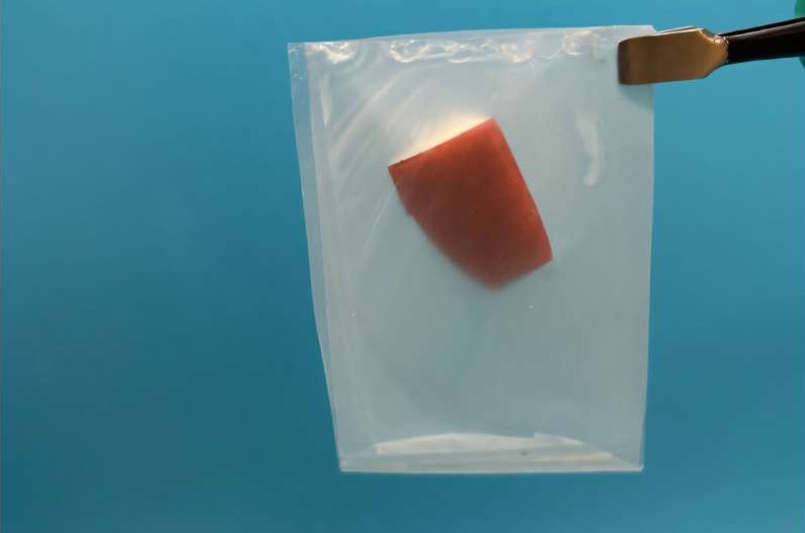 Source: Washington University
To develop the material, the team added the cellulosic structure that Washington University's engineers replicated, embedding the cellulose fibrils within the bioplastics.
The team used a version of their leaf-inspired cellulose nanofiber structure to improve the strength and biodegradability of polyhydroxybutyrate (PHB), which is a starch-derived plastic. The team then refined the process for use with polylactic acid (PLA).
The team explained that the new bioplastic, dubbed Layered, Ecological, Advanced and multi-Functional Film (LEAFF), turned PLA into a packaging material that biodegrades at room temperature.
Further, the material also allowed for low air or water permeability, which helps keep food stable, and a printable surface, which reportedly improves bioplastics' affordability by saving manufacturers from having to print separate labels for packaging.
"On top of all of this, the LEAFF's underlying cellulose structure gives it a higher tensile strength than even petrochemical plastics like polyethylene and polypropylene," the team concluded.
The material is detailed in the article, “Integrated design of multifunctional reinforced bioplastics (MReB) to synergistically enhance strength, degradability, and functionality,” which appears in the journal Green Chemistry.