New PIDES system delivers drugs without pain
Marie Donlon | August 05, 2025Researchers at Griffith University and the University of Newcastle, both in Australia, have created a painless transdermal drug delivery method.
Using a new microneedle technology dubbed PIDES (pulsating in situ dried electro stretching), the skin patch system relies on electro-stretched microneedles less than 1 mm in length to painlessly deliver medication through the skin.
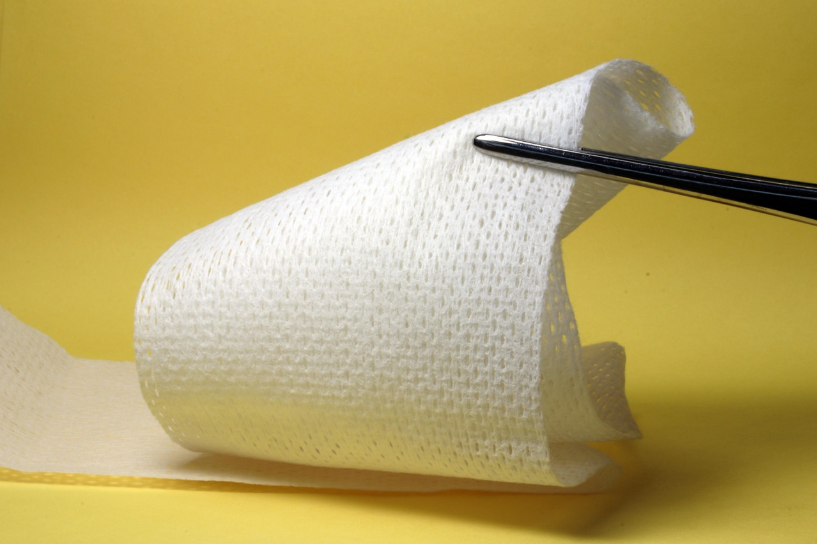 Fig1
Fig1
To accomplish this, the researchers applied pulsed electrohydrodynamic forces between two metal plates to stretch and mold polymer droplets into fine conical shapes.
When the solvent evaporated, the polymer solidified into a microneedle featuring a sharp and rigid tip that is capable of penetrating skin. These microneedles were then tested on agarose gel and pig skins to verify their mechanical strength as well as their ability to pierce skin.
The team also assessed whether or not the team could use the microneedles for drug encapsulation. The team used curcumin, which is a model compound, to demonstrate a controlled time-dependent drug release profile.
“Our technique represents an alternative way in microneedle manufacturing. By integrating in situ drying with electrostretching, we’ve simplified the process while ensuring high performance, repeatability, and drug compatibility. The PIDES technique is low cost and scalable, allowing multiple microneedles to be fabricated without compromising quality,” the researchers noted.
An article detailing the process, “Fabrication of Microneedles by Pulsating In Situ Dried Electrostretching for Transdermal Drug Delivery,” appears in the journal Small Methods.