Finding the hydrogen vault in Earth’s crust
S. Himmelstein | June 20, 2025Clean hydrogen could play a major role in fostering a more sustainable future. The resource is plentiful at depth within the Earth’s crust but locating it can be a complex task. An exploration strategy has been developed by researchers from the University of Oxford (U.K.), University of Toronto (Canada) and Durham University (U.K.) to streamline the identification of subterranean hydrogen fields.
The research indicates that the Earth's continental crust has naturally produced a vast amount of hydrogen gas over the last billion years — sufficient to satisfy energy needs for at least 170,000 years. Despite some losses and current inaccessibility, the remaining natural hydrogen could serve as a clean, emission-free energy source. 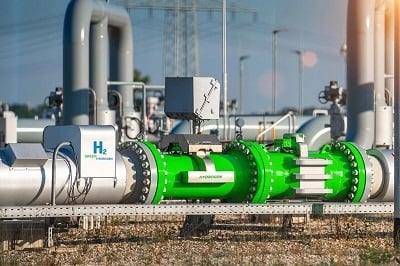 Source: Shutterstock
Essential factors are identified for developing an exploration strategy aimed at locating hydrogen systems. This encompasses understanding the quantity of hydrogen generated and the specific rock types and conditions under which this occurs, the mechanisms by which hydrogen migrates underground from these source rocks, the geological conditions that facilitate the formation of a hydrogen gas field, and the processes that lead to the depletion or destruction of hydrogen.
Areas requiring further investigation, such as the efficiency of rock reactions and how geological processes bring the necessary rocks and water together for these reactions to occur, are also cited.
While some potential hydrogen sources, like those originating from the Earth's mantle, have been the subject of much speculation, the research published in Nature Reviews Earth & Environment indicates that they are not practical sources. The components for a complete hydrogen system can be found in a variety of common geological environments within the Earth's crust.