New rice-paper robots safely decompose in only 32 days
Marie Donlon | July 22, 2025A team of scientists at the University of Bristol has determined that an ingredient used in Vietnamese spring rolls is biodegradable, non-toxic and appropriate for soft robotic prototyping, outreach and single-use applications.
Rice paper possesses material characteristics much like those present in the most commonly used silicone materials in soft robotics, with the researchers explaining: "Soft robotics is a rapidly growing field worldwide that involves the creation of more flexible and adaptable robots using soft materials like silicone elastomers. However, working with silicone generates long-lasting waste and is not always environmentally friendly."
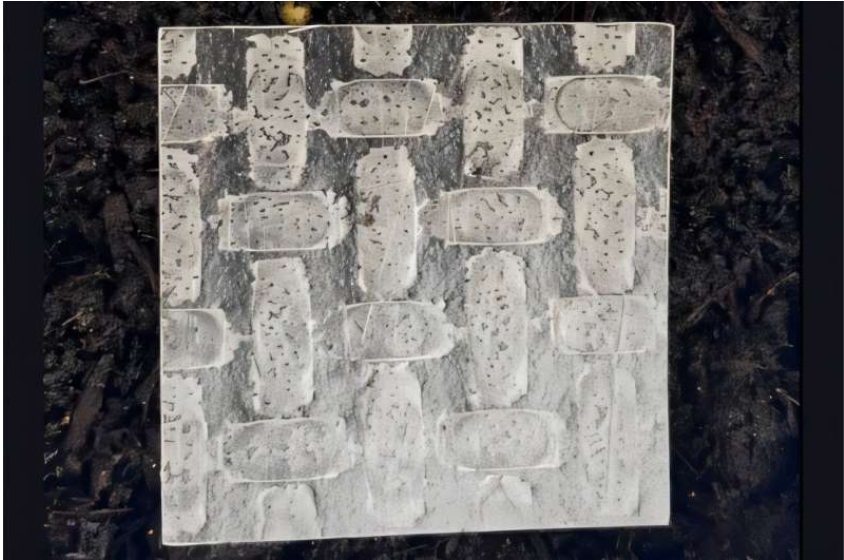 Source: University of Bristol
To better understand how rice paper, which is sourced from rice (Oryza sativa L.) and cassava root (Manihot esculenta), is similar to silicone, experiments measured its strength, its softness and its ability to break down without harming the environment.
The team determined that the rice paper performs similarly to the most widely used soft robotic silicone material in terms of mechanical properties while also offering the benefit of rapidly breaking down without the need for higher temperatures or humidities.
The goal is to build a soft robot that can move on its own using only biodegradable materials, for planting seeds in hard-to-reach areas. Going forward, the team intends to investigate and create a compostable fuel system and biodegradable control mechanism that would enable the robots to move from the laboratory and into the environment.
An article detailing the findings, “Sustainable Fabrication of Biodegradable Soft Robotic Actuators,” will be presented at the 2025 IEEE 8th International Conference on Soft Robotics (RoboSoft).