Handheld Explosive and Toxic Gas Detector Is Created
Riia O'Donnell | March 31, 2016Engineers at the University of Utah have created a fiber material and a handheld scanner that can sense the presence of alkaline fuel vapor, a building block in explosives, gasoline, oil and airplane fuel. The system could prove help detect fuel leaks that could lead to airline failures, oil leaks in pipelines, and even locate explosives.
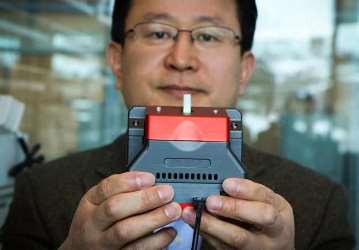 University of Utah materials science and engineering professor Ling Zang’s handheld explosive material and toxic gas detector. Image source: Dan Hixson/University of Utah College of Engineering.The portable sensor is different than currently available oven-sized instruments, developers say. The new sensor is based on a fiber composite that uses two nanofibers that transfer electrons. When the materials sense a combustible is present, they stick together, blocking the electron transfer. That signals the detector that an alkaline vapor is nearby, and causes an alarm to sound. The prototype is outfitted with 16 sensor materials that can detect a range of chemicals, including odorless explosives.
Applications may go beyond bomb-sniffing. For oil pipelines, the sensor could detect a problem in a line before the current method of responding to a loss of pressure. For airplane fuel tanks, embedded sensors could warn a pilot of leaks in real time, rather than waiting for a maintenance technician to remove a bladder and inspect it for damage. The team believes the device will be marketable in less than two years.