Clear coating blocks algae growth on underwater solar panels
Marie Donlon | June 10, 2025A team of researchers from the Technical University of Denmark (DTU) has developed a coating designed to prevent algae and other biofouling formation on underwater drones and their built-in solar cell platforms while performing missions below sea level.
According to its developers, the transparent coating enables the sun's energy to pass through while also preventing algae and other fouling materials from forming on solar cells.
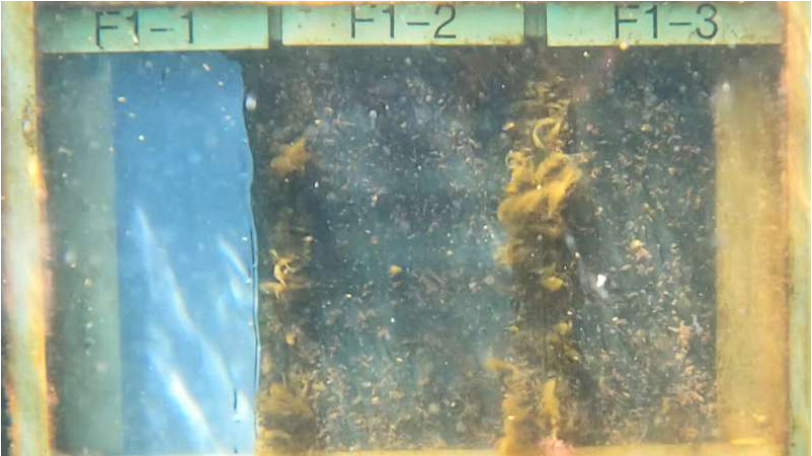 Source: Narayanan Rajagopalan
To ensure that underwater drones can perform underwater tasks — including surveying the seabed, surveillance and other inspections — they must be free of algae and biofouling so that they can absorb solar energy when positioned on the ocean surface.
As such, the DTU team developed its coating, which reportedly functions for up to three months without requiring mechanical cleaning of fouling.
"Making a coating that is both transparent and stays free of biofouling is difficult. You can hardly add anything to the coating, because it prevents the light from passing through," the researchers explained.
The DTU team added that when the new coating encounters seawater, a self-polishing effect occurs, wherein the coating’s outermost particles gradually dissolve and then are subsequently replaced by new active particles that function as a shield against fouling. In other words, new particles will emerge, ready to fight fouling as the coating’s top layer dissolves, throughout the life of the coating.
Looking for a solution to existing coating methods, where pigment layers tend to block the sun's rays, the team relied on a 20-year-old model simulation article, which predicted that by reducing the size of already small particles in the coating, from micrometers to nanometers, the particles would be small enough to not leave a pigment-depleted porous layer that prevents sunlight from reaching the solar cells. The team suggests that this method allows the solar cells to absorb energy, while the particles simultaneously prevent fouling.
"We reduced the size of the particles and the amount of ingredients enough for the coating to become transparent. It turns out that nanoparticles of copper(I) oxide and zinc oxide are particularly effective against fouling because they are tiny. Even in ultra-low concentrations, they are present in the coating in very large numbers with very little space between the individual particles. Barnacles and algae therefore experience the coating as a repellent barrier," the team noted.