Modular refineries: Agile infrastructure for an uncertain oil and gas future
Tyler Gleckler | June 20, 2025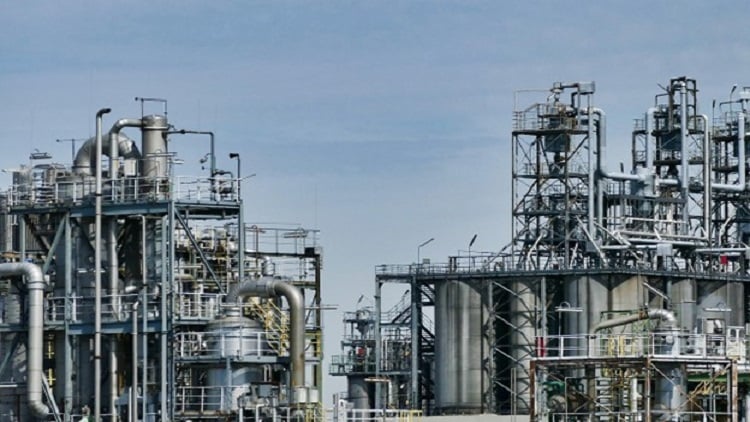 Source: Pixabay/CC0 Public Domain
In 2025, two forces steer downstream strategy: demand swings that punish overbuilt capacity and decarbonization mandates that penalize slow, capital-heavy projects. Conventional 200 kilo barrel per day (kbpd) complexes, conceived for 40-year horizons, now look risky in markets chasing flexibility. Modular refineries flip that equation by shipping prefabricated process trains to the site; they compress construction schedules from five years to under six months, slash upfront costs and let operators scale output in 10 kbpd to 30 kbpd increments. Agility, not sheer volume, becomes the new competitive moat.
What are modular refineries?
Modular refineries are pre-engineered, skid-mounted process units — distillation towers, heaters, reactors, utilities — fabricated in controlled yards and shipped in ISO-frame modules that bolt together like oversized Lego blocks. Instead of pouring concrete for a monolith, engineers assemble a refinery from standardized process trains sized for 10 kbpd to 30 kbpd of crude throughput. The concept traces its origins to offshore production modules and the shale boom’s mini-splitters, but today’s iterations add containerized automation, plug-and-play safety systems and digital twins that validate operability before the first shipment leaves the fabrication yard.
The model tackles three persistent headaches. First, it cuts capital exposure: owners buy capacity in stages rather than betting billions upfront. Second, it conquers geography, reaching land-locked or infrastructure-poor regions where mega-refineries are untenable. Third, it attacks schedule risk; parallel fabrication and civil work shrink time-to-first barrel from years to months. In short, modular refineries transform hydrocarbon processing from a bespoke mega-project into an agile, repeatable product.
How they work — Engineering anatomy
A modular refinery performs the same core functions as a full-scale complex; it simply distributes them across transportable skids that lock together on a compact slab. A typical 10 kbpd train starts with a two-stage, fired-tube pre-heater that elevates crude to flash temperature before it enters a five-plate atmospheric distillation tower. Overhead naphtha, kerosene and diesel side-draws flow into modular hydrotreaters equipped with stacked-bed guard reactors that tolerate wide sulfur swings. Beneath the tower, a kettle reboiler vaporizes reduced crude for a mini-vacuum column, yielding low-sulfur vacuum gas oil suitable for nearby topping plants or asphalt producers.
Pipe racks run along a standardized spine that houses instrument air, steam, cooling water and low-voltage power cables; each rack terminates in quick-connect headers, so field welds are minimal. An edge-mounted control room arrives as a fully wired ISO container featuring fault-tolerant PLCs, emergency-shutdown relays and pre-tested safety instrumented system logic. Designers pre-commission safety relief valves, inert-gas systems and leak-detection fiber optics in the yard, then use a digital twin to simulate heat- and material-balance scenarios under local crude assays. Once modules reach the site, crews set skids on pre-poured piers, bolt flanges, run cable trays and achieve mechanical completion in as little as 90 days, often faster than the environmental-permit cycle for a conventional plant.
Why modular refineries matter in 2025
Modular refineries resonate because they attack today’s pain points on four fronts. Economically, they carve 25% to 40% from total installed cost by shifting 60% to 70% of labor to controlled fabrication yards, locking in prices before inflation or exchange-rate shocks can ripple through a five-year work schedule. Faster mechanical completion, typically under six months, also accelerates cash flow; a plant that sells its first barrel 30 months ahead of a stick-built rival can weather wider price troughs and still reach breakeven.
Operationally, right-sizing pays dividends. A 15 kbpd unit can monetize associated crude at a remote field without the flare-gas penalties or trucking bottlenecks that plague small producers. When feedstock declines, owners can relocate individual trains or chain additional modules to meet a demand rebound, which are options that are impossible with a monolithic refinery that lives and dies on a single location and product slate.
Environmental and social impacts also improve because compact footprints disturb less land and consume fewer construction materials; prefabrication slashes onsite diesel emissions and transient-worker housing. Crucially for many resource-holding nations, local fuel output curbs illicit imports and adulterated petrol sales, boosting tax revenues while reducing the carbon tied to long-haul product shipping.
On the political axis, modular projects lower fiscal risk for governments that guarantee offtake or sovereign loans. Ministers can approve a phased 30-kbpd development instead of underwriting a 250-kbpd behemoth that could become a stranded asset in an energy-transition scenario. In a capital-constrained, policy-fluid 2025, agility trumps scale, and modular refineries embody that shift.
Who is setting the pace?
Among the handful of firms that have field-proven projects, Honeywell UOP holds the clear commercial lead. Its containerized UOP Russell and Modular Light Oil process trains, covering distillation, hydrotreating, sulfur recovery and NGL separation, ship as factory-wired skids that can reach mechanical completion up to six months faster than comparable stick-built plants. Honeywell leverages its long-running process licenses, catalyst portfolio and Experion controls to certify interoperability before a crane lifts the first module, reducing commissioning uncertainty and shortening payback cycles. Recent deliveries to shale condensate hubs in the U.S. and coastal import terminals in West Africa achieved start-up in well under 180 days, validating the schedule advantage in two very different logistics environments.
Around this anchor player, a broader ecosystem is taking shape. Large engineering houses now offer engineering, procurement and construction-lite service bundles that clip generic utilities and power blocks onto proprietary process modules, while specialist fabrication yards standardize skid frames to fit within road-legal envelopes. Private-equity developers aggregate brownfield tank farms, bundle Honeywell (or equivalent) trains into 10–30 kbpd clusters, and finance them through shorter-tenor debt, which is a structure that lenders increasingly favor as the modular segment edges toward a projected $3.6 billion market by 2032.
Where and when modular refineries excel
Modular refineries shine wherever crude is plentiful but traditional infrastructure is scarce — or where demand outpaces pipeline and terminal capacity. West Africa offers a textbook case; Nigeria’s 5 kbpd Waltersmith plant, assembled from yard-built skids and commissioned in 2020, now converts local crude into diesel and naphtha only 18 months after groundbreaking, easing chronic import dependence and transport costs.
Shale basins in the U.S. tell a parallel story. During the Bakken boom, a 20 kbpd facility in North Dakota, designed around modular construction principles, moved from green-field to first barrel in roughly 20 months, supplying on-spec diesel to drilling fleets and slashing long-haul trucking miles.
Looking ahead, the same plug-and-play logic appeals to island grids, Arctic mining camps, and Latin-American import hubs where every shipped liter of fuel carries a carbon and dollar premium. As policymakers tighten product-quality rules and carbon accounting, the ability to drop in a compliant, right-sized refinery between 2025 and 2040 will decide whether some regions pay import parity or capture more value at the wellhead.
Remaining barriers and emerging solutions
Even agile steel faces stubborn hurdles. Feedstock reliability tops the list: Hawilti’s Refineries notes that several sub-Saharan modular plants run below 50% utilization because local crude allocations lapse when exporters chase export premiums. Financing perceptions follow close behind. Lenders still discount modular projects as “prototype risk,” inflating borrowing costs despite their smaller tickets. Regulatory drag, especially sulfur and benzene limits that tighten faster than design baselines, can also strand units built around sweet crudes.
Technology is closing the gap. Factory-packaged modular sulfur-recovery and caustic-treat systems now slot between the vacuum column and product tanks, widening crude diets. Dynamic digital twins, already embedded in Honeywell-licensed trains, let engineers stress-test feed blends and emission scenarios months before sail-away, trimming commissioning rework by up to 30%. Add-on PEM electrolyzers, sized at 2 tpd to 5 tpd, are beginning to supply low-carbon hydrogen for future ultra-low-sulfur diesel specs, which is proof that standardization can evolve without sacrificing compliance.
A modular mindset for a modular era
Projects such as Waltersmith’s 5 kbpd Ibigwe refinery, commissioned in November 2020, and North Dakota’s 20 kbpd Dakota Prairie plant, scheduled and built in just 20 months, prove that pre-engineered kits can translate ambition into barrels long before a stick-built complex would pour its first foundation. In an oil market where capital prudence, emissions scrutiny and demand uncertainty now eclipse economies of scale, modular refineries offer a repeatable playbook: buy only the capacity you need, install it where the molecules are stranded and keep upgrading as policy and product slates evolve. Success will hinge on maintaining rigorous standardization, so every future module lands, locks and runs with the same speed, and on aligning fiscal incentives that guarantee crude allocation and fair carbon accounting. If those pieces come together, modular thinking will do more than shrink refinery footprints; it will redraw the downstream map for the energy-transition decade ahead.