
Why so many drivers are stuck in neutral over EV ownership
Cari Cooney | June 03, 2025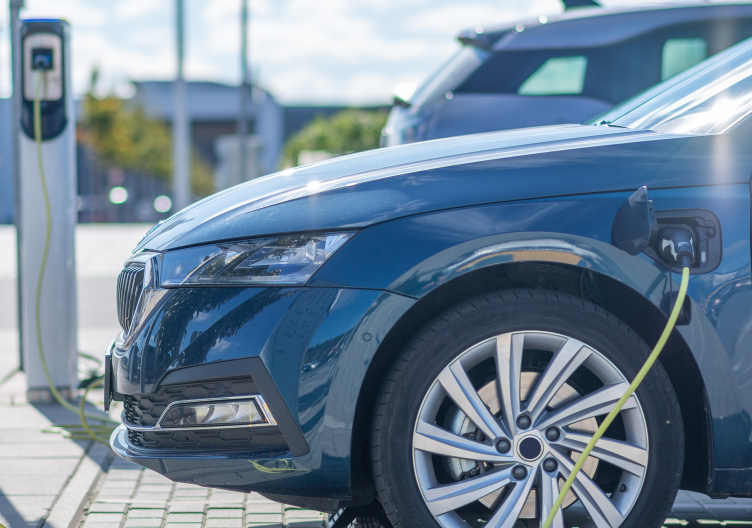 An EV sits during it's charging phase. Image Source: National Dept of Energy
There are more than 75 different electric vehicle (EV) models that hit the market over the last 4 years, a recent AAA survey shows that folks are still pretty hesitant about buying one. Only 16% of U.S. drivers surveyed said they're "very likely" or "likely" to go for a fully electric ride as their next car, which is the lowest interest level since 2019. Plus, the number of people who think they’re "unlikely" or "very unlikely" to buy an EV jumped up to 63%; a 12% difference from 2022's 51%. The numbers don't lie: the percentage of "watt worriers" not looking for an EV in their driveways anytime soon continues with steady acceleration.
What is causing the lack of interest? There's quite a few things. And while some are realistic, some are strictly misinformation from lack of education. Greg Bannon, a specialist in the subject and the director of automotive engineering at AAA, shares his thoughts:
"Since we began tracking interest in fully electric vehicles, we’ve seen some variability," said Greg. "While the automotive industry is committed to long-term electrification and providing a diverse range of models, underlying consumer hesitation remains."
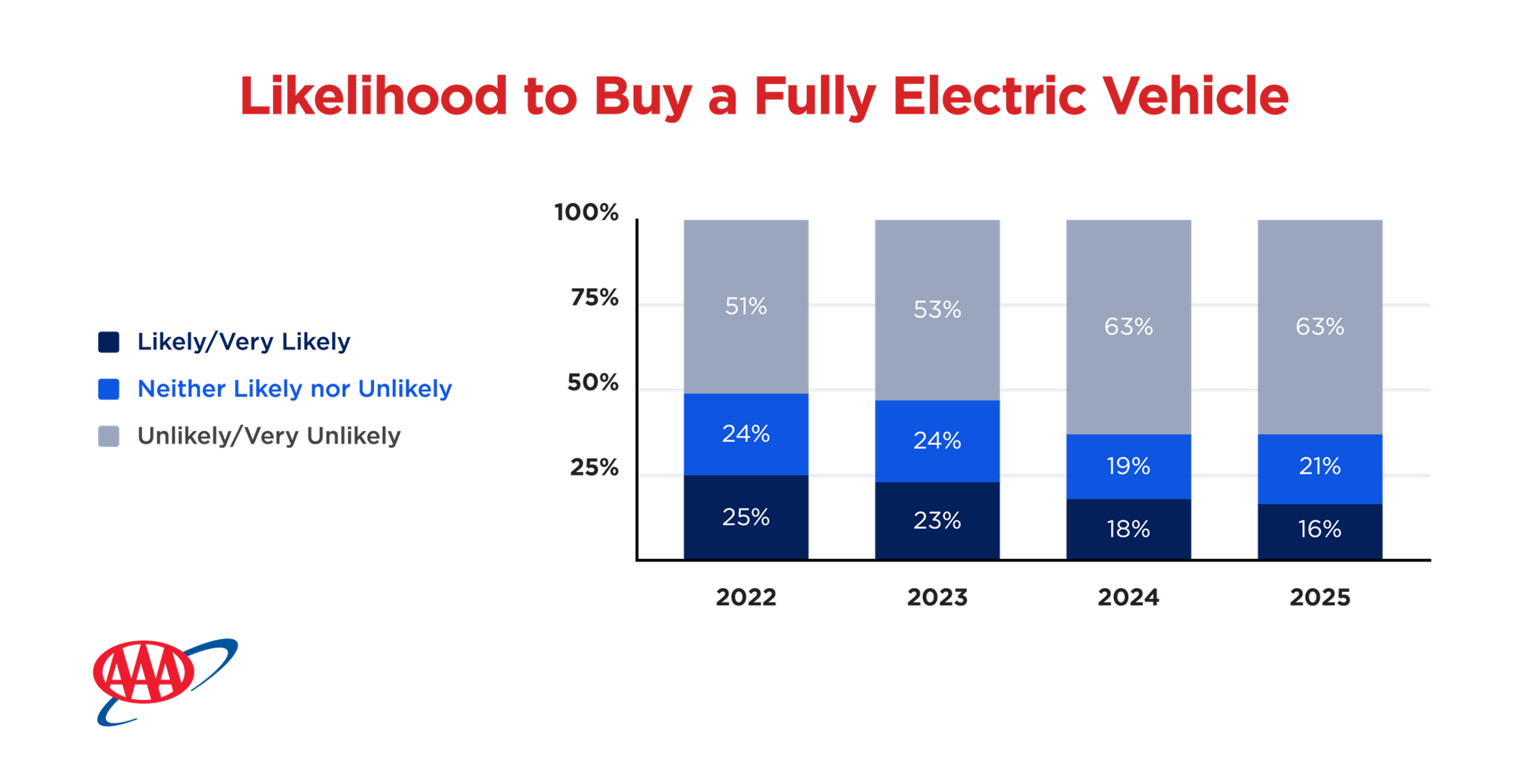 Graph included in EV study. Source: AAA
Roadblocks on the way to EV popularity
For a lot of people, (more than half surveyed, actually) the high cost to fix a battery and the upfront price tag are big consideration points for purchasing electric. Others worry that EVs aren’t great for long road trips, that charging stations aren’t easy to find, or that they might run out of juice mid-drive. Among those who are still on the fence or probably won’t buy an EV, about 31% say they have safety concerns, 27% struggle with setting up a home charger, and roughly 12% expect the tax credits to disappear.
Range anxiety continues to be a huge concern for people who have considered, but more than likely passed on getting their own EV. Blink Charging went into details on how they're combating these fears in one article, describing the traumatic thoughts of a lengthy road trip but lack of charging spaces, or having to go out of the way or waste time during charging sessions.
In 2022, fuel prices reached $5 according to AAA, prompting many Americans to think hard about an EV Making charging less stressful. Source: Blink during vehicle shopping as a cost-effective option. In that year’s survey, 77% cited gas prices as their top factor to go electric. Today, the national average for a gallon of gas ranges from $3.00 - $3.50, but ultimately depends on the state.
Data from this year shows people still eye EVs for the same reasons as previous years: less money on gas, lowering carbon emissions, less gouging costs for repairs. EVs maintenance costs continue to be the lowest when compared to every other vehicle category.
Full speed ahead into EVs future
More models, options, and top technologies still aren't enough to drag the plug-in pessimists towards the gas-free, cheaper, electric light. Just 23% of U.S. drivers think most cars will be electric within the next decade—down from 40% in 2022. Even with the worry of the previous mentioned tax savings disappearing, many people have stated the tax credits for EVs are lukewarm at best, and aren't deciding factors for ownership.
[Considering the switch to EV? Read more about electric vehicles on GlobalSpec]
There's hope for battery bashers who want to dip their toes into the EV driver seat. A hybrid vehicle might be the appealing compromise; a gas engine combined with an electric motor gives users peace of mind when it comes to the dreaded Range Anxiety. Long trips are timed at your leisure, but there is still the environmentally friendly factor. Electric mode for grocery pickups and gas mode for the road trips in between. This makes driving electric a little easier for those on the fence. You won't have the huge cost savings like when you'd get fully electric, but you get familiarity; to some people, that is definitely a "driving" factor.


Not many are advertising the fuel cost in $/mile including the cost of the electricity for the hybrid or full electric types. I'm also concerned about the fires that some of them have. As I understand, they are difficult/impossible
The allure of EVs is going down because the public is getting educated about them. They are expensive, battery replacement is expensive, range is terrible--especially
Chinese child labor to mine the rare earth elements that are used, disposal of these materials when the vehicle is taken out of service, vehicles are heavier for their size which means shorter tire life and more wear to roads are some environmental factors that are coming to light. Oh, yeah, let's not forget that the electrical grid can't handle a large number of these vehicles as well as the environmental impact of upgrading the grid.
Finally, the amount of pollution from gasoline vehicles has been reduced to virtually nothing. Aside from quiet operation and being able to charge them at home, EVs really don't offer many advantages over gasoline powered vehicles.
Not everything that is newer is better. Get over it!
In reply to #2
Thank you for taking the time to comment.
Just to clarify, the article does not advocate that EVs are inherently better than gas-powered cars. It simply presents recent data and survey results reflecting why many remain hesitant to adopt EVs—much like the concerns you raised, including cost, range, battery life, and environmental impact.
It's clear there are complex trade-offs with any vehicle technology, and your points highlight the importance of continuing to evaluate both the benefits and the challenges of EV adoption. Open, fact-based discussions like this are key to moving the conversation forward.
Thanks again for reading and contributing to the dialogue.
It is my impression that almost everybody that actually wanted a battery car... has one by now, maybe even their second or third one. The rest of us still aren't "sold" and won't be any time soon. Also, many of these folks with battery cars still have an ICE car in their personal fleet, just in case. Said another way... even EV owners aren't fully "sold".
One last observation: the proportion of battery cars vs ICE cars in the used inventory continues to grow and stay well above the same ratio calculated on sales of new. This means that the used market for battery cars is simply not healthy. The used battery cars pile up, unsold, and let's face it... time is not your friend in the car world. It only adds to the fear of battery replaceability / affordability.
In reply to #3
My 2011 Hyundai Elantra treats me just fine still. I bought it new - and it only has 53k miles on it after all this time. I'm definitely one of the apprehensive EV people I mentioned in the article.