
Three steps to ‘turbocharge’ EV adoption
Peter Els | October 30, 2023The automotive industry is undergoing a rapid transformation as the world shifts toward more sustainable transportation. Battery electric vehicles (BEVs) have emerged as a cornerstone of this transformation, offering zero tailpipe emissions and reduced reliance on fossil fuels.
However, to turbocharge the uptake of BEVs, several key areas still need to be addressed.
 Source: yarm_sasha/Adobe Stock
As with any emerging technology, especially one providing a radically different user experience to its predecessor, there are early challenges to BEVs widespread adoption.
Largely based on early BEVs, such as the Nissan Leaf and even Tesla Model S, potential owners expressed concerns around:
- Initial purchase price
- Time to charge
- Lack of charging infrastructure
- Safety
- Range
However, with more BEVs in circulation, drivers who have had the opportunity to experience the technology for themselves are changing their attitude toward owning an all-electric vehicle.
For instance: although range and charge anxiety feature high on the list of concerns in just about every consumer-facing survey, recent reports show that owners who use BEVs for daily commutes no longer perceive these as hurdles to EV ownership.
As far back as 2020, almost all owners surveyed (95%) in a AAA study report never having run out of a charge while driving, while 77% of those who were originally concerned about insufficient range said they became less or no longer concerned post-purchase.
These are promising signs that many of the hurdles that BEVs face en route to wider acceptance are either perceptions that ownership can set straight, or are being addressed through technological advances.
Still, there are nevertheless three crucial challenges that need to be addressed, if the prediction that EVs will make up 60% of new vehicle sales by 2030 is to be realized.
Better charging infrastructure and faster charging overcome BEV ownership concerns
According to J.D. Power's 2023 “U.S. Electric Vehicle Consideration Study,” 49% of shoppers cited a lack of charging station availability as the primary reason for delaying the purchase of an EV. Conversely, respondents considering a Tesla quoted charging-station availability as a reason to buy those models versus other brands.
While this may point to a lack of infrastructure, the problem is in fact more complex.
 Source: Boonterm/Adobe Stock
It is true that the number of public fast-chargers in the U.S. is sadly lacking and getting worse. According to the Alliance for Automotive Innovation, the ideal ratio of EVs to public EV charging points should be seven EVs per charger. However, the group’s latest EV market report shows that the U.S. is currently at 26 to 1. With 49 new EVs sold for every new charging port activated during the second quarter of 2023, the deficit is deepening.
But it is not only the lack of installed charge points slowing down BEV adoption. In its latest “Electric Vehicle Experience Public Charging Study,” research company J.D. Power found that 20% of EV drivers who visited a charging station did not charge their vehicles. Reasons for this ranged from chargers being inoperable to long queues.
To improve up-time and availability of charge points, the recent National Electric Vehicle Infrastructure (NEVI) program includes several requirements for the installation, operation and maintenance of charging infrastructure.
To qualify for the program, the federal government requires each charging port to have an average annual uptime greater than 97%, excluding scheduled maintenance, vandalism, natural disasters and in some cases, limited hours of operation. Downtime is calculated to the nearest minute, and for some ports, running at a reduced power level will be considered downtime as the hardware must remain able to deliver a minimum power level of 150 kW.
This power delivery is critical to reducing the long lines that often form at charge stations. For charge times to drop to those consumers experience when fueling traditional vehicles, high-power DC fast chargers capable of delivering 350 kW (or more) are needed.
However, as of the end of 2022 the U.S. Department of Energy reports that there were around 140,000 EV charging ports in the country, of which just 28,000 were DC fast-chargers — most of these only capable of 50 kW.
Even if 350 kW fast-charging stations were available, there is still no guarantee that BEVs will spend less time connected to the charger. Very few current Li-ion batteries can charge at maximum power with the battery’s state of charge (SoC) over about 60%.
The charging rate curve is not constant. Beyond about 80%, the charge rate normally slows down to a trickle to protect that battery health and longevity. This can significantly extend the time required to charge the BEV, depending on the SoC of the vehicle being charged. The remaining 20% required to reach full charge often taking as long as, or possibly longer than, the initial charge to 80%.
Of course, a smaller capacity battery would also require less time connected to a charger to achieve a comparable SoC to that of an EV with a larger battery.
At the same time, a smaller capacity battery will also help solve one of the greatest barriers to BEV adoption — the up-front cost of the vehicle.
Smaller battery packs will accelerate EV ownership
With the high initial purchase price heading the list of barriers to widespread EV adoption, smaller battery packs will not only reduce the time to charge but will also play a significant role in reducing the cost of ownership of a BEV.
 Source: malp/Adobe Stock
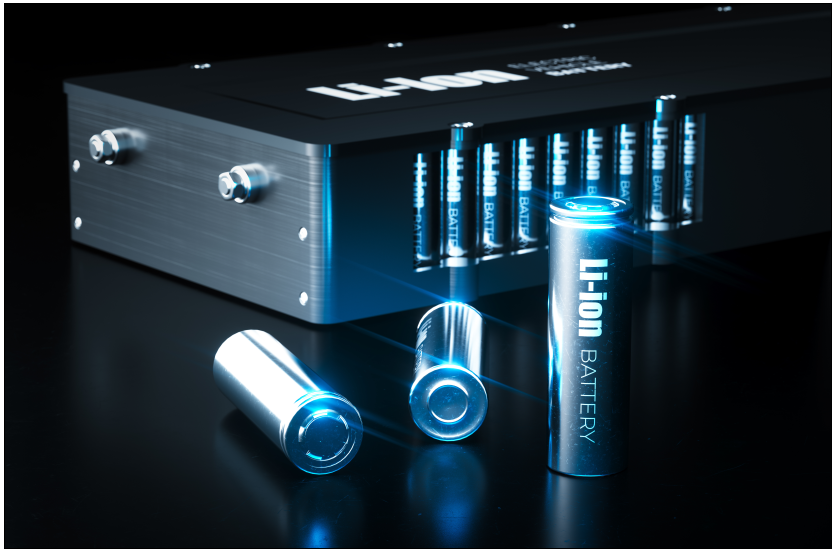
Typically, Li-ion battery packs account for between 30% and 45% of the total cost of the BEV. So, with a cost of about $153/kWh, a 2019 Tesla Model S standard range AWD 75 kWh battery pack, at $11,475, would cost $3,825 less than the long-range version.
While smaller battery packs would reduce the maximum range, reduced time to charge would in fact enhance the user experience. This is backed up by recent consumer surveys, such as that conducted by the AAA, which have prompted some analysts to comment that long range and high capacity batteries are not required.
Only 5% of trips in the U.S. are longer than 30 miles. Thus, with most of the storage capacity of big batteries never being used, a smaller, cheaper, fast-charging battery could speed up the adoption of BEVs, by delivering a better user experience.
Turbocharging the rollout of BEVs is not a singular effort but a complex, multifaceted challenge that requires collaboration, innovation and long-term commitment. By advancing battery technology, expanding charging infrastructure, and making BEVs more affordable, the industry can accelerate the transition to cleaner, more sustainable transportation.
As the future of mobility continues to evolve, these key steps will shape the future of the industry, reducing its carbon footprint and paving the way for a greener tomorrow.


A smaller battery pack paired with a hydrogen fuel cell range extender, seems like a good compromise...perhaps
The best way is to use the hydrogen fuel cell only. 5 minute fillup, you know.
I guess what bothers me the most is the idea of 'engineers' actually taking this stuff seriously. Climate change is NOT the huge problem that we're being told that it is, and electric cars are certainly not the solution to it if it were.
EVs introduce a whole host of worse problems, including mining of scarce materials, child labor, generation of electricity, etc.
When I was in engineering school, we were taught that the first step toward solving a problem was defining it. I have not seen that done in realistic terms yet, rather we are mandating a 'solution' without defining the problem nor studying the drawbacks. Somebody is going to make HUGE bucks backing a project that is doomed to fail miserably.