When ambition derails: The true cost of HS2
Ryan Clancy | June 05, 2025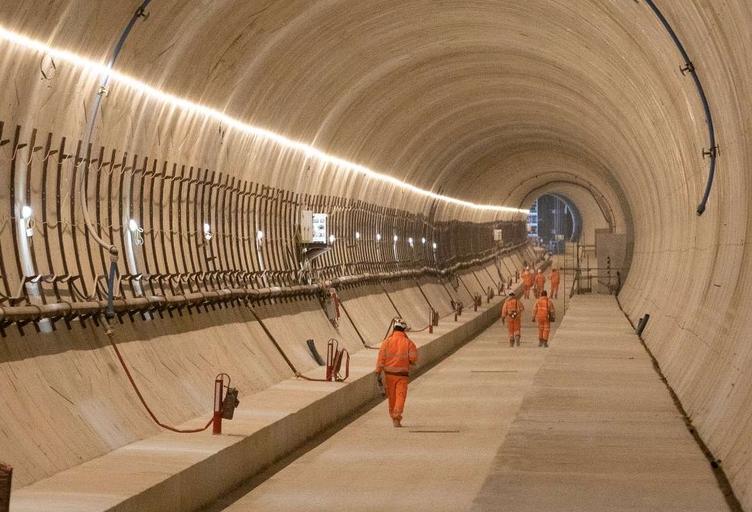 Work is underway on 42 viaducts, 103 bridges, 75 embankments and 59 cuttings. Image source: HS2 Ltd.
High Speed 2, aka the HS2 project, was meant to be the U.K.’s flagship rail project of the 21st century. The nation seemed like the ideal site to build the infrastructure for such a bold engineering vision. What could go wrong? As fast trains connected London to Birmingham, Manchester and Leeds, commute times would drop significantly and passengers would experience the kind of high-speed luxury travel long enjoyed in mainland Europe and parts of Asia.
As it turns out, plenty could go wrong, and did. To date, project costs have surged. What was once conservatively estimated as costing around £33 billion ($42 billion) to construct has now ballooned to over £80 billion ($102 billion). That’s a number British taxpayers are unlikely to forget or forgive.
In summary, the great North-South divide rail connection that gave HS2 national relevance is no longer being built, the line now focuses entirely on a fast commute between the Midlands and London, Birmingham to the metropolitan south and back again, the once out of control budget will likely cease its spiraling climb, but half the project has gone up in smoke.
Even the BBC has become irate at the situation. As of late last year, they were calling out the so-called “program reset” initiated by HS2 Ltd, listing political mismanagement and shifting goals as primary culprits behind the stalled progress. Less concerned about politics and more interested in engineering, we investigated. Is the entire project really a betrayal of the public trust? Read on to find out.
What is (was) the HS2 project?
The original congestion easing program was drafted in a ‘Y’ shaped configuration, with Phase One representing the pre-branching base, the London to Birmingham link. From here, Phase 2a would have taken care of western cities while Phase 2b served the east, all the way up to Leeds and beyond. Based on the following informational document, found at assets.hs2.org.uk, the locomotives on this newly built high-speed infrastructure would have topped out at around an accelerated 250 mph, comparable if not a tad faster than the TGV system running in France. It’s a lovely plan, designed to get British passengers where they needed to be in a fraction of the time once the full network was operational, but that broader vision has been chipped away by cost escalations. As of October 2023, as mandated by Rishi Sunak, Labour Prime Minister at the time, the project has been dramatically scaled back.
What went wrong with HS2?
Engineers just want to design and build. Civil engineering companies, the various contractors and subcontractors running the venture, are left to take the fall. Project mismanagement could be at the heart of the issue, which then leads to thoughts of shifting timelines, inconsistent funding, and a lack of clear communication between HS2 Ltd and the government liaisons who manage the construction teams. It’s not for us to judge; all of this and more likely played a part in derailing the project.
For the engineering issues that caused the budget to balloon, we can take an educated guess at why a high-speed rail project wrecked its financial roadmap. From underestimated land acquisition costs and unforeseen engineering challenges to Brexit and the pandemic, which slowed the global supply chain, everything that could go wrong, in fact did. Let’s just say that trains that can reach 250 mph speeds don’t hit their stride on winding track segments. They need long, straight sections to accelerate on, then they brake down to more conventional velocities when a station is approaching. In the U.K., that’s not a simple proposition.
[Interested in more rail-based transportation tech? Read more at GlobalSpec...]
In the U.K., the acquisition of land so that these extended straight sections could be constructed was complicated by a combination of resistance to the destruction of natural beauty spots and the presence of high-density population areas. Simply put, Britain is packed with cities and nearby areas of natural significance that are fiercely protected, and rightly so. The Chilterns alone are responsible for hosting many environmental features, with walkers and bird spotters enjoying the area. Biodiversity is high there, and water catchment sites are crucial for sustainability. At any rate, the end product of all of this plucky resistance was a proposition for 11 tunnels and 50 viaducts, sending the budget rocketing by billions.
Making the program reset more palatable
It’s also more than possible that initial project estimates came in seriously low. It happens. The engineering of a high-speed rail infrastructure is difficult enough. Elevation changes must be minimized, track curves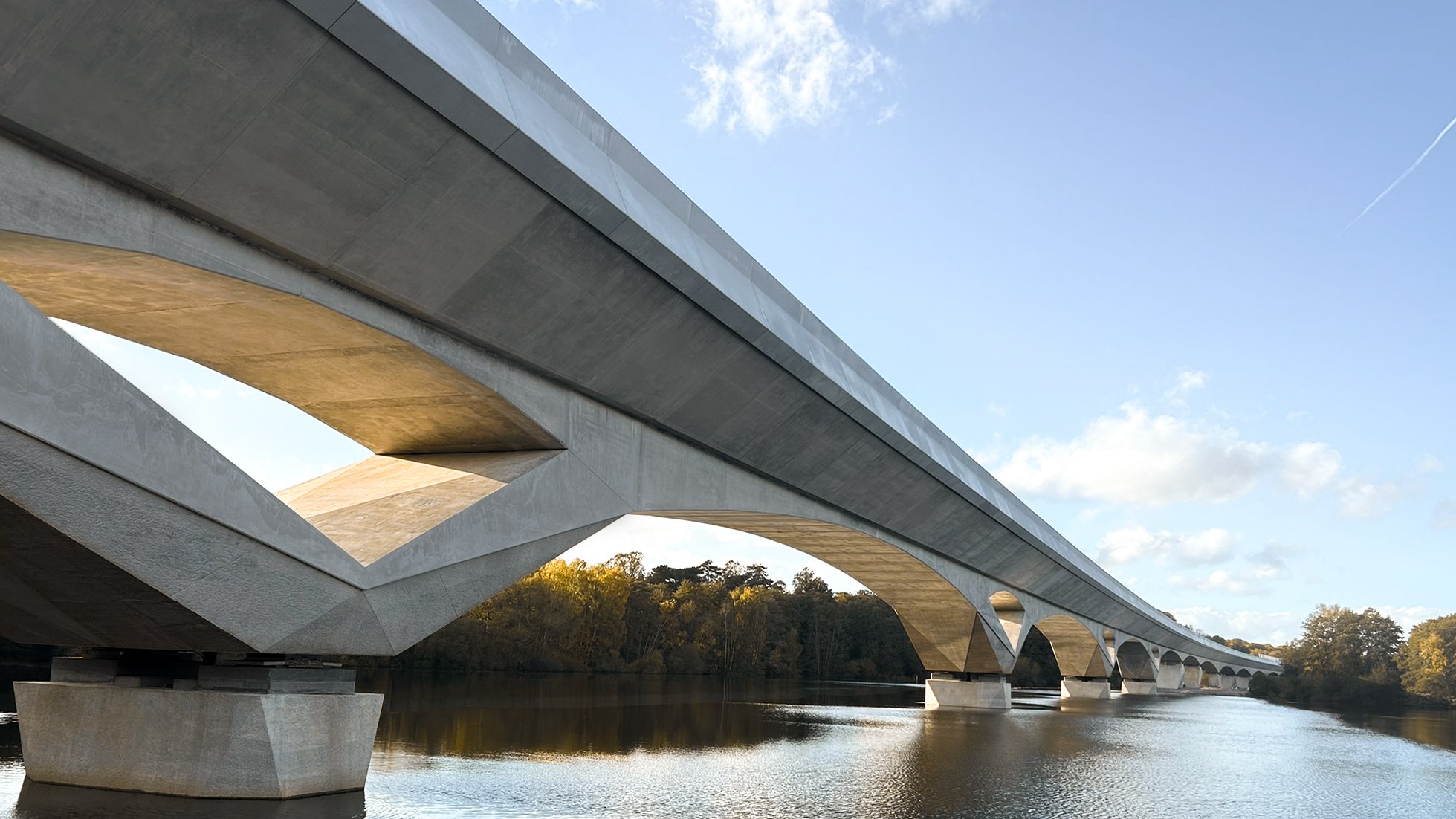 HS2's Colne Valley Viaduct - view from Korda Lake. Source: HS2 Ltd. kept reduced so that unique stresses are distributed equitably. Add to this already challenging list of conditions a range of environmental concerns, from protected landscapes to densely populated urban areas, and complexity increases exponentially.
The solution, at least in part, is to accept the Phase 2a and 2b cancellation and focus the resources of HS2 on the London to Midlands infrastructure, which is already well underway. By concentrating efforts on this more manageable section, the project can at least achieve some of its original goals, that of providing fast travel between two major cities while easing congestion. As for the North, beyond Birmingham, the NPR (Northern Powerhouse Rail) system is being planned as a bottleneck reducing substitute, one without high-speed trains. This northern alternative still awaits government approval, though.
As an example of civil engineering and government oversight gone awry, we suspect no one is in a hurry to repeat this multi-billion sterling pound debacle. With overblown cost estimates and political interference, HS2 proves that engineering visions and real-life transportation needs don’t always align. Hopefully, those challenges will be conquered in the future and in a way that satisfies local environmental groups. In the meantime, the fallout from HS2’s failures will have to be absorbed, financially, by taxpayers.