Boosting productivity through smarter lift truck use
Jody Dascalu | May 27, 2025Lift trucks are integral to material handling operations, but their performance is often constrained by mismatches between equipment, layout and workload. In high-volume facilities, inefficiencies in fleet configuration, operator behavior and maintenance can compound into significant losses over time. Optimizing lift truck usage requires a systems-level approach that connects technical specification, real-time data and workflow design.
Fleet assessment and equipment suitability
Optimizing lift truck performance begins with aligning equipment specifications to actual operating conditions. This involves collecting data on load weight ranges, lift heights, aisle dimensions, floor surfaces and operating hours. A mismatch between equipment capability and workload can lead to accelerated wear, reduced efficiency and increased safety incidents.
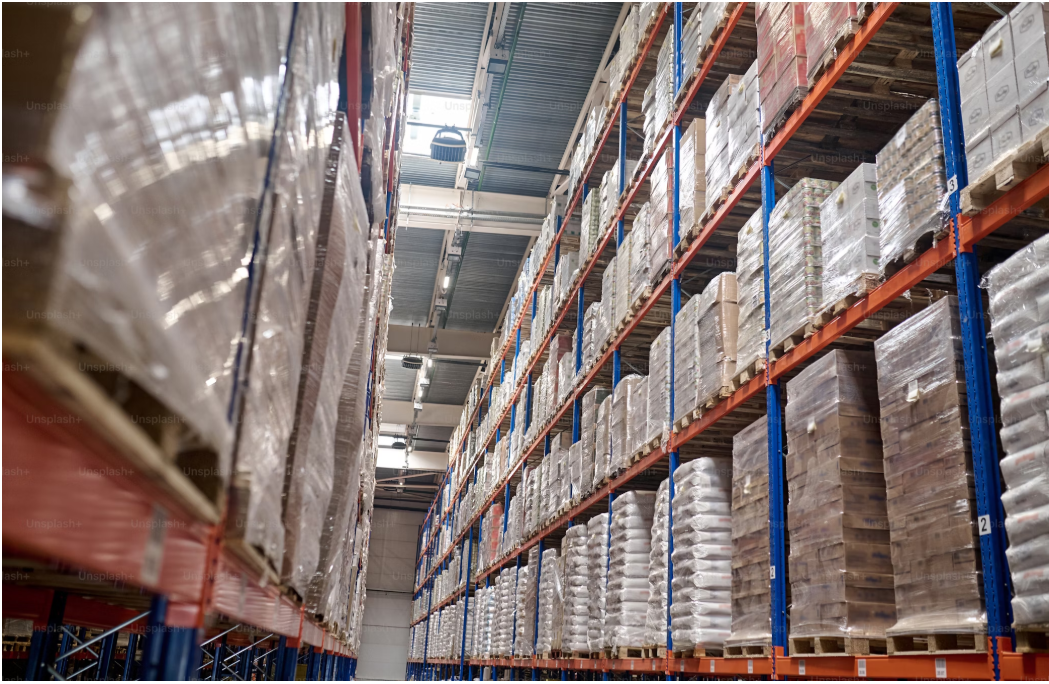 Warehouse heavy duty shelving. Source: Unsplash
The selection of lift truck class should reflect both the physical layout of the facility and the handling characteristics of the materials involved. For example, Class I electric riders may be well suited for indoor use with tight aisle configurations, while Class IV internal combustion units may be necessary for heavier loads or outdoor operation on uneven surfaces. Proper classification ensures the truck can operate safely within the constraints of the environment.
A technical cost analysis should also be conducted to evaluate whether leasing or ownership offers the best value over time. This evaluation should include acquisition cost, residual value, maintenance responsibility, usage variability and asset flexibility. For facilities with fluctuating demand, leasing may provide better alignment with operational needs, while predictable, high-utilization operations may benefit from owning assets outright.
Operator training and performance impact
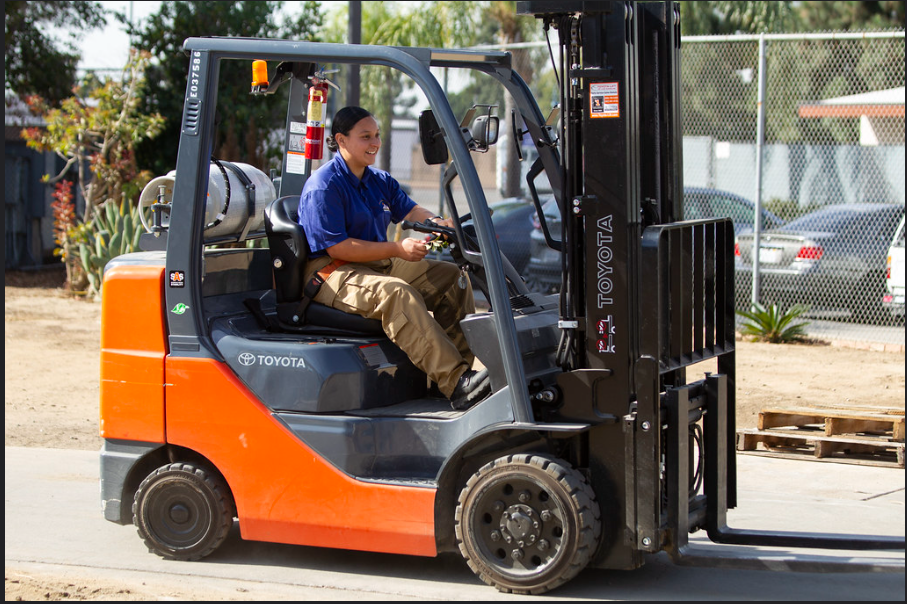 Driving a counterbalanced forklift. Source: California National Guard/Flickr
Operator competence has a measurable effect on productivity, safety and equipment longevity. Certified operators tend to demonstrate lower error rates, smoother load handling and shorter cycle times. These factors contribute directly to throughput and reduce unplanned maintenance events.
Structured training programs should comply with recognized safety and operational standards such as OSHA or ISO 3691. Effective programs include initial certification, facility-specific instruction and scheduled refresher courses. Core content should address equipment controls, load stability, battery or fuel systems, hazard identification and emergency response procedures. Regular evaluations help ensure that operators maintain proficiency and adjust to changes in workflows or equipment types.
Operational data frequently shows a link between operator behavior and mechanical failures. Common examples include mast deformation from incorrect stacking techniques, accelerated tire wear due to excessive steering inputs and hydraulic overloads caused by improper load estimation. Recording and analyzing these events enables targeted interventions and supports continuous improvement in both training content and safety protocols.
Preventive maintenance and lifecycle planning
Maintenance strategies should be based on actual usage patterns rather than default manufacturer intervals. Trucks operating in multi-shift or high-load environments accumulate wear at a faster rate and require more frequent inspections. Key scheduling parameters include engine hours, lift cycles, ambient temperature and exposure to dust or corrosive materials.
Combining service records with real-time sensor data allows for more precise condition monitoring. Parameters such as oil temperature, hydraulic pressure, brake wear and battery voltage can signal early signs of degradation. This approach supports predictive maintenance, minimizing the likelihood of unexpected failures and associated downtime. For electric fleets, tracking battery health is essential for maintaining operational continuity and charging efficiency.
Replacement planning should be guided by both chronological age and cost per operating hour. Once repair frequency or component costs reach a predefined economic threshold, replacement becomes the more cost-effective option. A data-informed lifecycle strategy reduces unplanned expenses, avoids performance degradation and ensures that the fleet remains aligned with operational demands.
Telematics integration and data-driven optimization
Modern lift trucks often come equipped with telematics systems that capture a range of operational metrics, including runtime hours, idle time, travel distance, lift counts and impact events. This data provides a granular view of how each truck is being used and where inefficiencies occur.
Integrating this data into a warehouse management system allows for centralized monitoring and performance analysis. With real-time visibility, managers can detect underused units, identify peak usage periods and make informed decisions about asset allocation and staffing.
Applying analytics to this operational data reveals patterns that are not always visible through manual observation. Bottlenecks caused by congestion, inefficient routing or equipment mismatch can be pinpointed and addressed. Over time, this supports a continuous improvement loop based on measurable performance outcomes.
Facility layout and route engineering
The layout of a facility significantly impacts lift truck efficiency. Analyzing traffic patterns helps determine optimal aisle widths, turning zones and staging areas. Narrow aisles may maximize storage but can also lead to congestion and slower travel if lift truck types are not properly matched to the layout.
Reconfiguring racking systems and storage zones to reduce unnecessary travel distance improves cycle times and lowers energy consumption. High-frequency SKUs should be stored closer to loading zones or within easy access paths to minimize handling time.
Simulation tools can model different layout scenarios and forecast their impact on material flow. These models help validate changes before physical implementation, reducing trial-and-error and ensuring that new configurations are aligned with throughput goals.
Safety systems and risk mitigation
Safety is a core operational parameter, not a peripheral concern. Implementing engineered controls — such as proximity sensors, automatic speed reduction in congested areas and restricted access zones —significantly reduces the risk of collisions between lift trucks, pedestrians and infrastructure.
Visibility enhancements, including mirror placements, lighting upgrades and clearly marked travel lanes, support safer navigation. Standardized signage and pathway demarcation help enforce traffic rules and reduce decision-making time during vehicle operation. These measures contribute to a safer, more predictable environment.
Safety incidents directly affect productivity through equipment downtime, medical leave and investigation-related disruptions. Quantifying the impact of each incident in terms of lost hours and repair costs allows organizations to justify investment in proactive safety improvements.
Performance metrics and continuous improvement
Establishing clear KPIs is essential for managing lift truck efficiency. Key metrics include average load cycle time, idle percentage, utilization rate per unit and number of loads moved per hour. These indicators help assess both individual operator performance and fleet-level productivity.
Baseline benchmarks should be developed for each operating environment, considering workload variability, shift structure and equipment type. Tracking deviations from these benchmarks helps detect emerging issues and opportunities for refinement.
Continuous improvement relies on a feedback system where performance data informs operational changes. This includes retraining, layout adjustments, maintenance scheduling and equipment redeployment. A structured review process ensures that adjustments are based on evidence, not assumptions.