
Airbus sets sights on sustainable skies
Ryan Clancy | April 11, 2025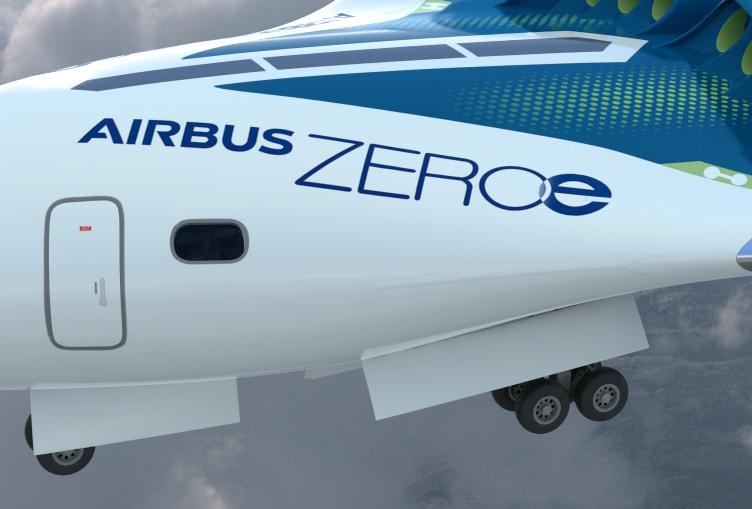 Image source: Airbus
Some fascinating aeronautical engineering developments are coming down the pipeline. We’d wanted to say “are in the air” but felt the collective groan from our readers would have been more than we could handle. To name two, there’s Boom’s XB-1 and the Hermeus Quarterhorse hypersonic prototype on the horizon. Next-gen propulsion systems will soon cut out a substantial portion of leg cramping flight time on long-haul commercial flights. Is that really where we want science to be focusing its energy? While these advancements are exciting, there's a pressing need for the aviation industry to prioritize emissions reductions, especially as the planet faces the escalating effects of climate change.
Flying is responsible for about 2.5% of global CO2 emissions (iea.org), and the continued development of supersonic and hypersonic jets could exacerbate this problem. That number dropped a few years ago but has jumped back up since the COVID emergency passed. If hypersonic engineering has its way, the jet engines of tomorrow will exacerbate this problem. Instead of doubling down on go-faster-engineering, more air travel pollution, perhaps the focus should shift to cleaner alternatives, like Airbus' next-gen hydrogen-powered aircraft, a solution that promises to cut emissions dramatically.
What is the ZEROe commercial aircraft?
More a project, less an actual aircraft design, ZEROe (airbus.com) is a series of concepts and technologies being explored by Airbus to develop the world's first zero-emission, hydrogen fueled commercial aircraft. It’s very much a nascent project, meaning engineers can’t just drive out to the end of a runway to see the three potential designs take off on a test flight. To be clear, these are concepts only, and the end goal is to create a craft whose only byproduct is a trail of water vapor, not CO2. The three prototypes are as follows:
1. Turbofan engine design
Uses an engine architecture that’s similar to conventional jet propulsion, as seen on commercial airliners. The engineering challenges are complex. The ‘modified’ engine needs to apply alloys and ceramics that are designed to manage completely different thermal behaviors, replacing jet fuel with liquid hydrogen. Cryogenics storage and higher energy-per-mass burn ratios are two of the many engineering issues to solve.
Range: 2000 nautical miles. Hybrid turbofan engines.
2. Turboprop engine concept
A return to legacy propeller propulsion may suggest outdated technologies, but we’d politely suggest that this is a demonstrably inaccurate assumption. The design may look dated, but those looks conceal advanced technologies. Modified fuel injectors and engine piping must be part of the eventual final turboprop architecture, handling the higher burn temperatures and lower storage and fuel delivery management systems. Alternatively, tests are being conducted on hydrogen fuel cells, which then power the propeller systems via electric motors.
Range: 1000 nautical miles, ideal for short haul flights. Hybrid turboprop or fuel-cell powered electrics.
3. Blended-wing body concept
The most exciting of the three designs, at least to look at, the blended-wing body (BWB) is the futuristic option. It’s also the most technologically challenging concept to turn into reality, but worth the effort due to the potential for aerodynamic efficiency. It all comes down to the nature of hydrogen’s low volumetric energy density and the cryogenic storage requirements. By using a blended wing and fuselage, the craft is more aerodynamic and capable of storing more fuel. That’s a twofold benefit, in case engineers are paying attention to the numbers. Conventional builds are all very well, but with advanced cryogenics systems in place, equally advanced fuselage shapes may be required.
Range also 2000 nautical miles.
Solving uniquely hydrogen-fueled challenges
The path to zero emission reality is not straightforward, unfortunately. The hydrogen fuel cell notion adds credence to the notion of hybrid engine power, bringing advanced motor electrics into the design formula. Blended wing body aircraft are also new to the game, introducing a whole new set of issues, not least of which would be acceptance by passengers. The BWB build holds the potential for greater lateral design freedom, though, increased spatial volume for passenger-specific interiors, as well as more cryonics storage capacity, so it’s a design that warrants investment, to be sure.
Even the conventional turboprop and turbofan builds, applied to just as conventional tube and wing configured aircraft, have their challenges to overcome. Modified fuel injectors and ignition chambers aside, there’s the question over whether to use hydrogen fuel cells or to directly ignite the engine. Perhaps a best-of-both-worlds hybrid design trumps both, bringing online the electrics when precise takeoff maneuvers were called for, then switching to hydrogen thrust when cruising at a high altitude.
One thing’s for sure: No wonder Airbus engineers are so engaged in testing these concepts; the logistics involved in choosing a final, commercially viable, cryogenically or fuel cell incorporated winner are astoundingly complex.
[Read more about Airbus and aviation sustainability on GlobalSpec]
Tackling the infrastructural hurdles
Getting passengers to accept flying wings is the least of the aviation industry's concerns when these aircraft finally enter service. As hydrogen becomes the fuel of choice, creating truly emission free flight for the first time ever, we’ll need the infrastructure to store and transport liquid hydrogen safely. Airports will require extensive modifications, including cryogenic storage tanks, specialized fueling systems, and updated safety protocols to handle hydrogen’s unique properties.
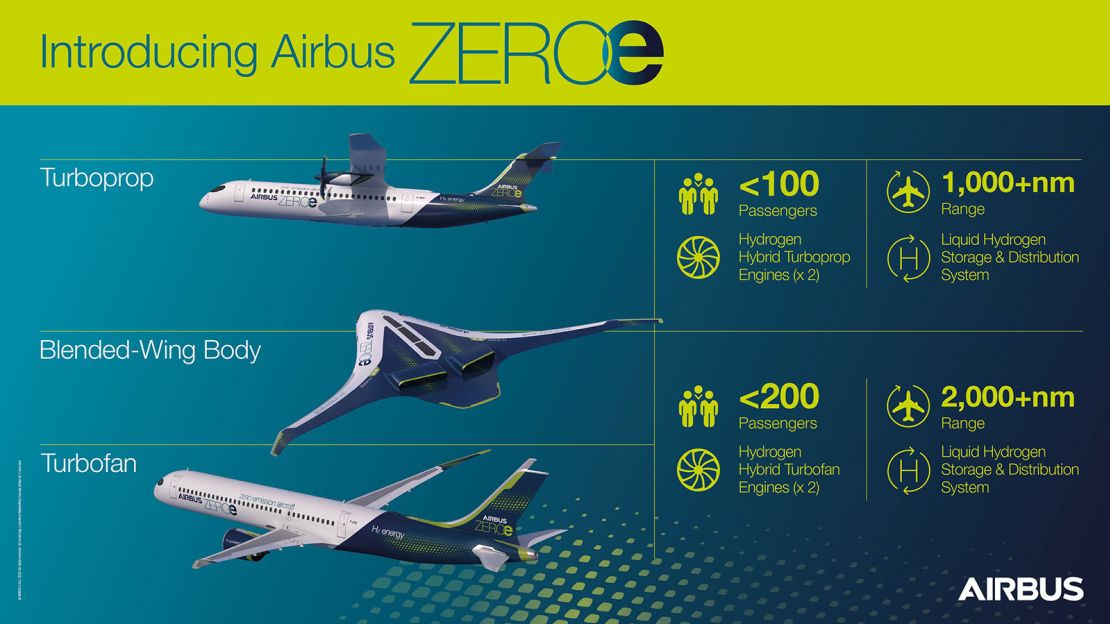 Image: Airbus
Enter GOLIAT, the Ground Operations Of Liquid Hydrogen aircrafT project. This initiative, again led by Airbus and their European partners, seeks to establish hydrogen based refuelling technologies, implementing LH2 solutions in a burgeoning framework of airport hubs as they’re added to a sprawling ground operations ecosystem. The project aims to develop and validate safe and scalable liquid hydrogen refueling systems, supporting Zeroe and other green aircraft as they take to the skies.
Beyond infrastructure, the supply chain must evolve to produce green hydrogen at scale. Most hydrogen today is derived from fossil fuels, which defeats the purpose of zero-emission flight. To make aviation truly sustainable, renewable energy sources like solar and wind must power hydrogen production through electrolysis, creating a clean fuel cycle from start to finish.
Then there’s the challenge of aircraft certification. Regulatory bodies like the FAA and EASA will need to establish new safety standards for hydrogen propulsion, from containment and leakage prevention to crash resilience. Pilots and maintenance crews will also require specialized training to operate and service these next-generation aircraft safely. Confidence is growing in Airbus headquarters, though, and solutions to these challenges are in the works. A European Union endorsed €10.8 million grant should help keep both the airborne Zeroe and ground-based GOLIAT projects aloft as well, at least on paper.



These designs rely on Hydrogen. Might it not be simpler to manufacture synthetic kerosene or methanol on the ground using biomass and Green hydrogen? Batteries with a hybrid combustion engine backup for extra range in emergencies could also cover a lot of short hops between electric high speed rail stations.