Smart valves and actuators: Enhancing control in industrial fluid management
Jon Lowy | March 31, 2025The rapid advances in a spectrum of technologies in recent decades has transformed many industries, enabling smarter, more efficient systems across diverse applications.
One such transformation is the integration of smart valves and actuators in industrial fluid management. These previously unimagined devices are reshaping how fluids are controlled, monitored and managed, offering previously inconceivable levels of precision, reliability and efficiency.
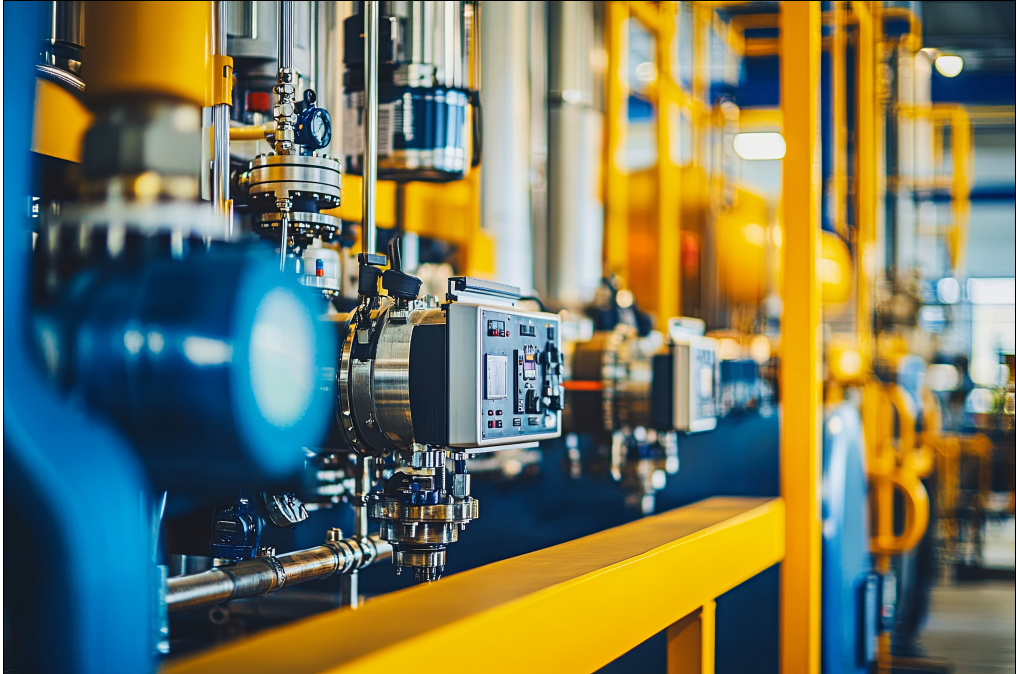 Smart valves are everywhere — wherever fluid control is important, there's an opportunity for better control, data visibility and fault finding. Source: MohamadIzzudin/Adobe Stock
A deep dive into the significance of smart valves and actuators, their working principles, benefits and their role in modern industrial processes is a worthwhile summary and review. Much of the development in this space has been incremental, slow to adopt in infrastructure with long functional life and above all hardly visible when it is implemented.
Knowing what has been and can be achieved through adoption of relatively small component and functional method changes empowers system operators and specifiers to look beyond their current knowledge and see opportunities that are perhaps low visibility.
Understanding smart valves and actuators
There has been a quiet revolution in valves and valve actuators, that much of the world has not seen. Traditional valves rely on manual or relatively primitive automatic control, whereas smart valves incorporate sensors, edge-computing processors and data rich communication interfaces that together offer dynamic, real-time control and monitoring, with local analytics and well-informed oversight.
This switch from ‘traditional’ to advanced technologies typifies much of the industrial and consumer, medical and defense product sectors outcomes. Valves are a simple, bounded microcosm that illustrates the broad technological revolution that has reconstructed the world in subtle and obvious ways.
How smart valves and actuators work
Smart valves and actuators operate through the cooperation of sensors, controllers and actuators to enable the device to self-adjust to meet set-point conditions.
The sensors continuously monitor the relevant performance parameters, such as flow rate, pressure and temperature.
The controller processes the sensor data, comparing it against pre-set parameters or operational requirements and generates control signals to instruct settings alterations.
Based on these control signals, the actuator adjusts the valve position to maintain appropriate flow area to achieve the specified objectives.
The system renders self-derives real-time feedback to operators and control oversight, ensuring accurate and timely adjustments as device operational conditions and outside instructions dictate.
Valves are devices that directly regulate the flow of fluid by opening, closing or partially obstructing the flow path. They are traditionally manual, but increasingly operated by actuators, typically powered by electrical, pneumatic or hydraulic motive force. These are driven/controlled by sensors embedded in the device that measure parameters of interest, such as pressure, temperature, flow rate and valve position.
Integrated controllers take the sensor signals and use these to drive control/settings algorithms that automate the operation. These are commonly IoT devices, allowing individual valve data to be viewed as part of a larger control/monitoring schema.
The advantages in operational reliability, responsiveness and effective control achieved through use of these devices are significant.
Enhanced precision and control result from smart systems enabling precise regulation of fluid flow, pressure and temperature, ensuring consistent process quality with high reliability.
Automated adjustments reduce energy consumption and minimize waste through variations and quality issues, enhancing overall process input and output efficiency.
Embedded sensors and communication interfaces allow continuous, real-time monitoring, with machine learning and artificial intelligence (ML and AI) enabling predictive maintenance and minimized downtime.
Smart valves can be integrated into centralized control systems, allowing operators to monitor and adjust parameters remotely and enabling system wide feedback control capabilities.
Optimized processes and reduced downtime result in significant cost savings, over long operational periods.
Automated shutoff mechanisms and real-time monitoring enhance system and operator safety in critical applications, preventing catastrophic failures.
Smart valves can self-identify and, in some cases, even apply automated correction to fault conditions in real time. They can also trigger maintenance actions before failures occur. Advanced ML/AI algorithms allow these systems to adapt to changing conditions, for continuously optimized performance.
Smart valves are applicable to systems of any size, from small-scale operations to massive industrial facilities and they can be progressively integrated into more complex networks and control algorithms, as production systems evolve and expand.
Applications of smart valves and actuators
Smart valves and actuators are utilized across an extensive range of fluid handling applications and industries. Two illustrative examples show the importance of this technology.
In oil and gas extraction, processing, delivery and storage, these devices regulate and monitor flow and pressure in pipelines. They enhance safety by detecting leaks and anomalies in real time and facilitate the automation of large resource extraction, refinery and distribution networks. Without valve automation and distributed sensors, these processes are intensively manual and can be dangerously error prone. System operational safely has been greatly improved by this combination of reliable automation and clear oversight.
Food and beverage manufacturers use smart fluid controls in maintaining hygiene and process consistency and in automating cleaning-in-place (CIP) systems. This has resulted in the ability to increase scale and efficiency in brewing, for example, where continuous processes and extreme reliability of low intervention control has revolutionized both scale of production and quality in the resulting product.
Challenges in implementing smart valves and actuators
While the benefits are significant, there are challenges to take into account in implementing such system improvements.
The upfront investment for smart valves and actuators can be substantial, especially for retrofitting existing systems where legacy equipment compatibility can pose challenges. Integrating smart components into legacy systems may require significant modifications and expertise, causing hard to plan for cost ramifications.
IoT-enabled systems are vulnerable to cyber threats, necessitating robust security measures and override systems to prevent attack-triggered failures/damage.
Plant operators and maintenance personnel typically need specialized training to handle advanced systems effectively, although the developed knowledge can greatly enhance job satisfaction.
Smart valves in action
Oil and gas pipeline optimization: Leading energy companies regularly implement smart valves to monitor and regulate flow in remote pipelines. The real-time monitoring capabilities reduce pumping energy consumption by up to 15% and identify potential leaks before they escalate.
Water management in urban areas: Municipal water authorities deploy smart valves to optimize pressure in distribution networks. This is reported as bringing 20% reductions in leakage losses — when identified repairs are acted upon — plus valuable energy savings.
Food processing efficiency: Beverage manufacturers increasingly integrate smart actuators into bottling lines, achieving precise control over fluid flow and reducing product wastage.
Conclusion
Smart valves and actuators offer steadily developing opportunities in industrial fluid management, with precise and responsive control, improved efficiency and powerful oversight.
As industries continue to embrace digital transformation and industry 4.0 principles, these advanced systems play an increasingly pivotal role in optimizing operations and achieving sustainability goals.
Predictive algorithms powered by ML and AI will enhance decision-making and fault detection capabilities, and the shift toward wireless connectivity simplifies installation and reduces maintenance costs. Together, these result in precision play a crucial role in achieving environmental goals, through optimization of resource usage and reduced waste.
By investing in smart valve technology, businesses can stay ahead of the pack, achieving competitive advantages and operational excellence.