Hydrogel-enhanced soil waters and feeds itself
Marie Donlon | July 19, 2024Researchers at the University of Texas at Austin have developed a new type of soil that is capable of capturing water from thin air to keep plants hydrated and to manage the controlled release of fertilizer for an uninterrupted supply of nutrients.
Making this possible is a hydrogel material developed by the University of Texas at Austin team. During trials, the hydrogel-infused soil produced larger, healthier plants versus those produced with regular soil — and while using less water and fertilizer.
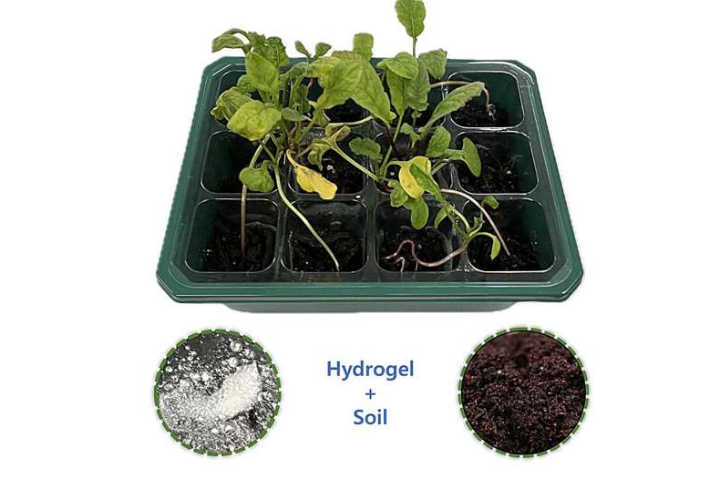 Source: University of Texas at Austin
Further, the team added that plants rooted in the hydrogel-enhanced soil experienced a reported 138% increase in stem length versus a control group rooted in regular soil. Similarly, the engineered soil promises to achieve roughly 40% water savings, thereby reducing the need for frequent irrigation.
"This new gel technology can reduce the burden on farmers by decreasing the need for frequent irrigation and fertilization. The technology is also versatile enough to be adopted across a wide range of climates, from arid regions to temperate areas," the researchers added.
The new class of hydrogels promises to potentially address issues affecting the agriculture industry, including water scarcity and efficient nutrient uptake, the researchers concluded.
An article detailing the engineered soil, “Self-Irrigation and Slow-Release Fertilizer Hydrogels for Sustainable Agriculture,’ appears in the journal ACS Materials Letters.