Nearly 59,000 U.S. Bridges Are Structurally Deficient
By Engineering360 News Desk | March 08, 2016Almost 59,000 bridges in the U.S. are structurally deficient, and at the current pace of bridge investment it will take at least 21 years before they are all replaced or upgraded—according to an analysis of the U.S. Department of Transportation's 2015 "National Bridge Inventory" database undertaken by the American Road and Transportation Builders Association (ARTBA).
Approximately 9.5% of the nation's approximately 610,000 bridges are classified as structurally deficient, ARTBA found, but cars, trucks, school buses and emergency vehicles cross these deficient structures nearly 204 million times a day. If placed end to end, the deck surface of the nation's structurally deficient bridges would stretch from New York City to Miami (1,340 miles), the organization says.
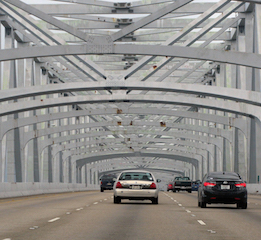 Vehicles of every type cross these deficient structures nearly 204 million times a day. Image credit: Pixabay. To help ensure public safety, bridge decks and support structures are regularly inspected by the state transportation departments for deterioration and remedial action. They are rated on a scale of zero to nine—with nine meaning the bridge is in "excellent" condition. A bridge is classified as structurally deficient and in need of repair if its overall rating is four or lower.
"Every year we have new bridges move on the list as structures deteriorate, or move off the list as improvements are made," says Dr. Alison Premo Black, ARTBA's chief economist, who conducted the analysis. In the 2015 report, there were 4,625 bridges deemed to be structurally deficient that were not so classified in 2014, she says. On the positive side, about 7,200 bridges classified as structurally deficient in 2014 were repaired, replaced, rebuilt or removed from the 2015 inventory. The net effect, Black says, is a slow national reduction in the overall number of structurally deficient bridges.
Black notes that the recently enacted five-year federal highway and transit law provides a modest increase in funding for bridge repairs. But "the funding made available won't come close to making an accelerated national bridge repair program possible," she says. "It's going to take major new investments by all levels of government to move toward eliminating the huge backlog of bridge work in the United States."
Among the other findings of ARTBA's analysis was that:
· Almost all of the 250 most heavily crossed, structurally deficient bridges are on urban highways, particularly in California.
· The states with the greatest number of structurally deficient bridges are Iowa (5,025), Pennsylvania (4,783), Oklahoma (3,776), Missouri (3,222) and Nebraska (2,474). The District of Columbia (10), Nevada (35), Delaware (48), Hawaii (60) and Utah (95) have the fewest.
· At least 15% of the bridges in eight states are structurally deficient: Rhode Island (23%), Pennsylvania (21%), Iowa (21%), South Dakota (20%), Oklahoma (16%), Nebraska (16%), North Dakota (16%) and West Virginia (15%).