Scientists design UVC device for food sanitization
Marie Donlon | December 20, 2023A portable, self-powered ultraviolet-C (UVC) device that reportedly inactivates two common bacteria associated with foodborne illnesses has been developed by scientists at the University of Illinois Urbana-Champaign.
The so-called Tribo-sanitizer features a UVC lamp powered by the triboelectric effect, which occurs when two dissimilar materials come into contact or slide against each other, thereby transferring electric charge.
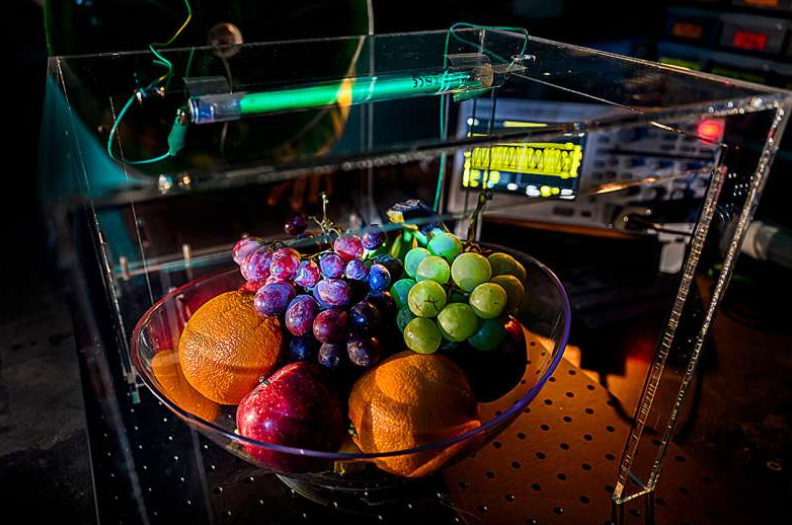 Source: Fred Zwicky
According to the team of scientists who created and subsequently tested the device, the Tribo-sanitizer successfully inactivated two common foodborne bacteria — Escherichia coli O157:H7 and Listeria monocytogenes — by damaging their DNA in the lab.
To test the device’s decontamination capabilities against the two types of bacteria, the team used the Tribo-sanitizer on fresh apple peels, romaine lettuce and polyethylene terephthalate (PET), which is often used in food and beverage packaging, all of which contained the two different bacteria.
The team determined that the Tribo-sanitizer showed promise for eventually meeting the U.S. Food and Drug Administration's (FDA’s) sanitization standards by achieving reductions of roughly 99.999% on the E. coli strain in buffer solution and on PET.
Further, the Tribo-sanitizer reportedly achieved slightly smaller reductions of roughly 99.98% for the E. coli bacteria on produce, 99.9% for L. monocytogenes on the apple peels and 99.8% for E. coli and 98% for L. monocytogenes on romaine lettuce, the team found.
In the future, the team suggests that the device could be used to sanitize both foods and surfaces in the home. It could also potentially be used in the aftermath of a natural disaster or in conflict zones where electricity is inconsistent or absent.
An article detailing the team’s findings, “Tribo-sanitizer: A portable and self-powered UV device for enhancing food safety,” appears in the journal Nano Energy.