Team turning cocoa pods into flame retardants
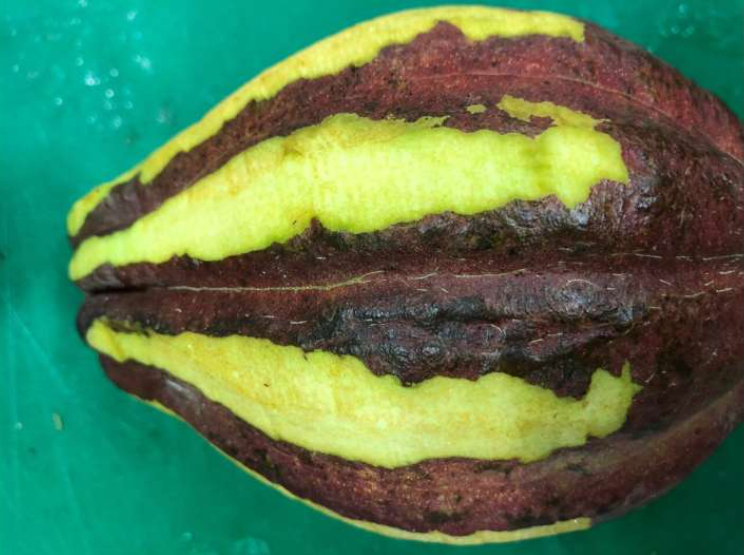
Marie Donlon | November 01, 2023A team comprised of researchers from different universities throughout the U.K. is demonstrating that cocoa pod husks — a by-product of cocoa production obtained following the removal of the beans from the fruit — could potentially be used as the starting material for flame retardants.
To avoid the accumulation of wasted cocoa husks, of which an estimated 24 million tons are leftover each year in the production of chocolate, researchers are eyeing the waste husks, which contain the tough lipid polymer lignin for renewable replacement for some substances often derived from petroleum — notably flame retardants.
 Source: Dimitris Charalampopoulos
To determine if the lignin in cocoa pod husks could be processed into flame retardants, the researchers milled the husks into a powder, which was subsequently rinsed to remove fatty residues and then boiled in a mixture of butanol and acid — a lignin extraction method dubbed the butanosolv process. Once isolated, the lignin's quality and purity were confirmed by the researchers who found no evidence of carbohydrates or other contaminants.
During three chemical steps, the pure lignin biopolymer was modified to possess flame-retardant properties. To accomplish this, 9,10-dihydro-9-oxa-10-phosphaphenanthrene-10-oxide — a fire suppressant molecule otherwise known as DOPO — was incorporated into the backbone of the lignin polymer.
In the lab, the researchers reported that when the modified lignin was heated, it charred, but did not burn, a suggestion that the formula could function as a flame retardant.
An article detailing the research, “Organosolv Pretreatment of Cocoa Pod Husks: Isolation, Analysis, and Use of Lignin from an Abundant Waste Product,” appears in the journal ACS Sustainable Chemistry & Engineering.