Sensors Counter Humidity-Caused Biofouling
Engineering360 News Desk | February 05, 2016A Spanish engineer has developed sensors with antibacterial properties to overcome the biofouling that can affect devices operating in high-humidity environments. "Humidity is one of the most controlled and most monitored aspects nowadays owing to its great importance in a whole range of industrial processes or in areas such as food monitoring, air quality, biomedicine or chemistry," says Aitor Urrutia. His Ph.D thesis at the Public University of Navarra focused on the phenomenon.
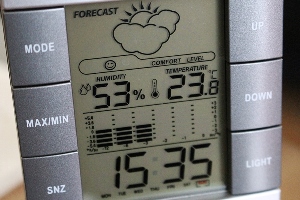 Humidity is monitored due to its importance in a variety of industrial processes. Image credit: Pixabay. The proliferation of bacteria in high-humidity environments leads to the formation of biofilms—ecosystems of bacterial microorganisms attached to a surface. The resultant biofouling can impact the performance and service lifetimes of many materials and devices that operate in such environments. Costs from maintenance work and the replacement of equipment due to biofouling can be extensive, says Urrutia.
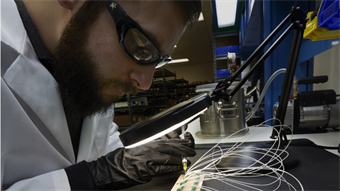
To develop humidity sensors that avoid this problem, Urrutia created an optic structure to which silver nanoparticle-embedded coatings with a thickness of less than one micron are applied. "These coatings provide the sensors with two additional functionalities: antibacterial properties and increased sensitivity," he says. According to Urrutia, the fiber optic sensors offer other advantages, including their biocompatibility, immunity with respect to electromagnetic interference, low cost, size and weight and the possibility of long-distance measuring.
The new humidity sensors have potentially wide applicability—in hospitals to monitor human respiration, in foodstuff and pharmaceutical industry facilities and in the monitoring of structures or cavities that are difficult to access, such as cooling towers or offshore buildings.