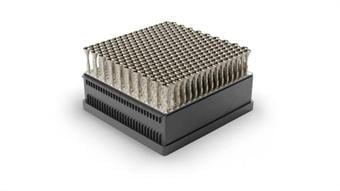
Consortium develops inexpensive titanium armor for land-based defense applications
Marie Donlon | July 31, 2023A consortium of researchers from Rheinmetall BAE Systems Land (RBSL), the University of Sheffield (UoS), BAE Systems, MBDA, Transition International and the Advanced Forming Research Center (AFRC) are attempting to develop a path for processing low-cost titanium for use across the land, maritime and air defense sectors.
Under the Affordable Titanium to Useable Defense Equipment (ATiTUDE) program, the consortium has used the FCT HP D 250 (FAST/SPS) followed by the FENN Hot Rolling Mill in Phase 2 — both of which are located at the Royce Discovery Center at the University of Sheffield — to manufacture armor plate for ballistic protection in land-based applications.
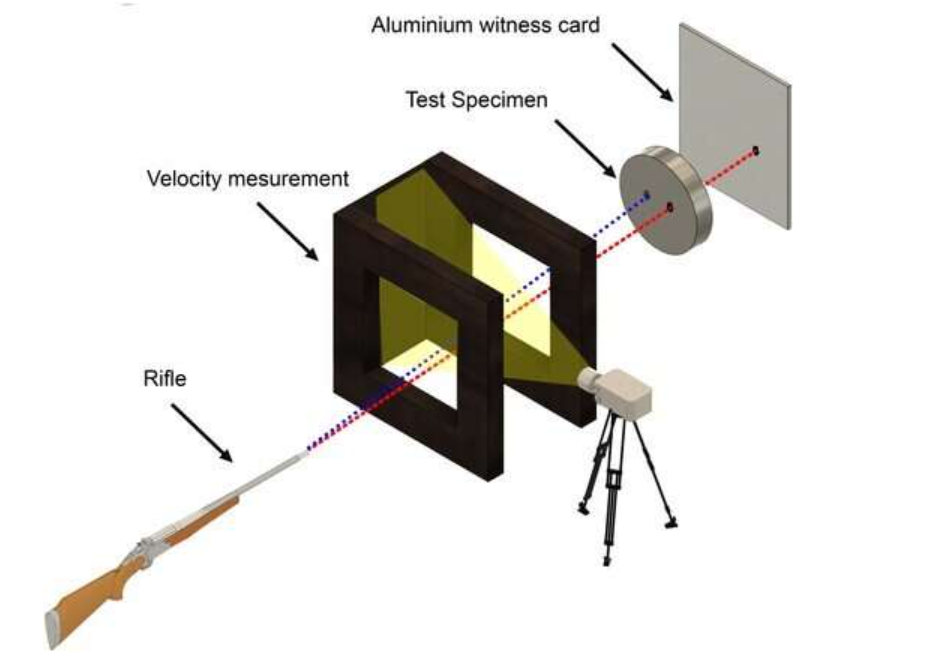 Source: University of Sheffield
Although most land-based military vehicles feature rolled homogeneous armor (RHA) or high hardness steel (HHS) armors, which are largely cheaper than titanium, the consortium explained that titanium alloys demonstrate a high mass efficiency compared to RHA and can consequently offer a 30% to 40% weight reduction while simultaneously maintaining survivability.
As such, the team has developed a powder metallurgy process for the production of titanium alloys that promises to eliminate several thermo-mechanical processing steps — particularly if combined with an inexpensive feedstock like oversized Ti powder or machining swarf, for instance.
The researchers reportedly performed ballistic testing of Ti-64 armor plate, which was manufactured from a combination of both low-cost powder and swarf via the so-called FAST process. According to the researchers, the armor plate produced using this process reportedly meets the MIL-Spec V50 ballistic limit requirement against a given threat.
The article detailing their findings, “Effect of processing route on ballistic performance of Ti-6Al-4V armour plate,” appears in the journal Materials Science and Technology.