Advanced tech makes inroads in bearing manufacture
Ryan Clancy | July 24, 2023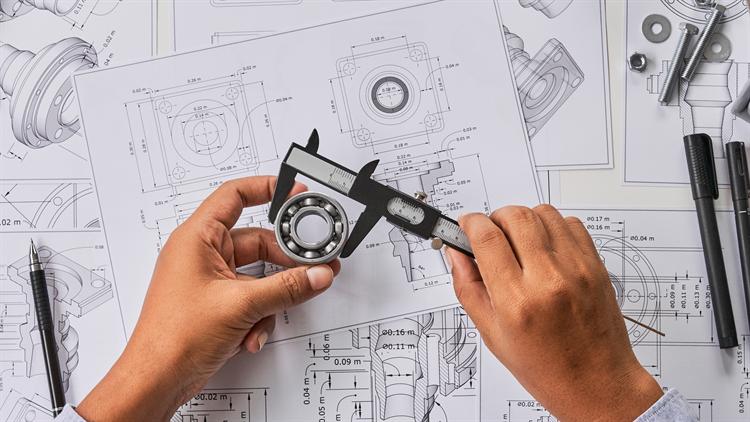 Source: Chaosamran_Studio/Adobe
Advances in technology are changing how mechanical bearings are designed and manufactured. Thanks to smart bearings, bearing simulation software, specialist lubricants, and advances in manufacturing, bearings can now be manufactured with greater accuracy and efficiency than ever before. This is shattering traditional production timelines, reducing costs, maximizing efficiency and creating higher-quality end products.
Smart bearings
Smart bearings are outfitted with sensors, which allow them to communicate to local and wide-area digital networks. Through this integration, bearings can detect when they need maintenance before a problem arises and prevent costly breakdowns. Smart bearing technology also provides valuable data about their operational performance, allowing for more accurate forecasting and better maintenance planning. Sensing solutions can typically measure shaft load, temperature, vibration or noise - all of which can provide indicators about bearing condition.
In addition, the use of smart bearings can provide industrial operators with real-time information about failure modes, which helps prevent major disruptions in production processes. This data can be used to identify potential problems before they become larger issues and may even indicate a need for process or design modifications to improve performance. Smart bearings also enable predictive maintenance, which involves taking proactive steps to maintain machines more efficiently. This ultimately leads to improved efficiency, fewer breakdowns, and higher productivity levels, as well as reduced downtime.
Bearing simulation software
Bearing simulation software is allowing design engineers to assess and optimize rolling element bearings in ways that were impossible a decade ago. Now, using advanced integrated analysis of rolling elements, designers can accurately predict bearing performance, life and reliability without the need for expensive laboratory or field tests. By taking into account factors such as loading conditions, lubrication and materials used in bearing construction, designers are able to develop optimal designs that exceed previous standards.
This state-of-the-art technology allows for far greater accuracy when predicting bearing behavior than ever before. With detailed simulations, engineers can quickly identify areas where potential failure may occur and take corrective action before it becomes an issue. This means that manufacturers can now produce bearings with higher performance levels and longer life cycles, resulting in reduced expenses on repairs and maintenance.
Moreover, bearing simulation software also enables more efficient design processes by reducing the time needed for prototyping. Engineers can quickly review potential designs using simulation models before creating physical prototypes, which reduces costs as well as time to market. This technology is revolutionizing the bearing industry by taking away much of the risk associated with research and development.
Specialist lubricants
Specialist lubricants provide solutions to unique problems and allow for longer performance life. The range of specialist lubricants available now is far more advanced than ever before, incorporating a wider selection of high-quality synthetic oils, thickeners used in grease manufacture, and additives that provide greater load capacity, corrosion resistance, noise reduction, higher speeds, and extreme temperature tolerance.
These specialist lubricants offer a variety of benefits beyond traditional lubrication options. For example, waterproof and chemically resistant lubricants can be used in tough environments where regular oil would not perform sufficiently well. Cleanroom lubricants allow for consistent performance in sensitive areas with minimal particles generated from breakdowns. High-vacuum lubricants offer a unique solution for use in sealed systems, protecting internal parts from damage.
These specialist lubricants have been designed to provide outstanding performance and longevity. The enhanced range of synthetic oils allows for optimal protection and viscosity even under high load conditions or extreme temperatures. The thickeners used in grease manufacture allow for greater stability and resist breakdowns due to shock or vibration better than traditional lubrication options. Additives can be added to suit specific needs such as increased corrosion resistance, improved thermal conductivity or sealed-system operation.
Advances in manufacturing
The use of modern CNC machines, laser cutting and EDM technologies have enabled manufacturers to create highly precise bearings with superior performance characteristics. Additionally, the development of ultra-clean bearing steels has allowed for improved contact wear resistance and reduced contact fatigue in ball bearings.
Modern steel-making and de-gassing techniques enable manufacturers to produce bearing steels with lower levels of oxides, sulfides and other dissolved gases. This provides superior corrosion protection against rusting and pitting over time. Moreover, hardening techniques developed by specialized metallurgists have resulted in extremely durable steels that can withstand greater shock loads and higher rotational speeds while still maintaining a long service life.
The latest advances in technology have allowed manufacturers to produce precision bearings with minute tolerances and superior surface finishes. The use of computer-aided design (CAD) software allows for the efficient manufacture of custom components with a variety of shapes and sizes. This flexibility offers greater design options for bearing engineers, allowing them to select the perfect size, shape, and material for their application.
These technological advancements have revolutionized the industry by providing more durable and reliable ball bearings that can withstand higher loads and rotational speeds while providing superior wear resistance. By investing in modern manufacturing, manufacturers are able to offer precision bearings that have longer service lives, increased performance capabilities, and reduced chances of failure due to contact fatigue or corrosion damage.
Summary
The implications of these advancements are significant, as they increase the efficiency and accuracy of bearing designs, enhance production capabilities, and offer more efficient service with customers. This can lead to continuing advances in the manufacturing sector and ensure that companies stay competitive now and far into the future. These technologies also reduce waste and energy costs by making manufacturing processes more automated and reducing time spent on design processes.
In essence, the number of possibilities enabled by these new technologies stands to benefit both businesses as well as their customers, leading to a more sustainable, prosperous future for all involved. Ultimately, this is good news for those looking to be ahead of the game in bearing development; when it comes to investing in technology and keeping up with trends, now is definitely the time.