
New algorithm identifies biological sex via dental X-rays
Marie Donlon | July 30, 2023A team of researchers from the Mepco Schlenk Engineering College in Sivakasi, Tamilnadu, India, has developed an artificial intelligence (AI) algorithm that can determine the biological sex of a subject from dental X-rays alone.
Although forensic science relies on dental records to identify missing or deceased individuals thanks to the unlikeliness that two people will share matching records, they do not reveal the biological sex of the subject in question, according to the researchers.
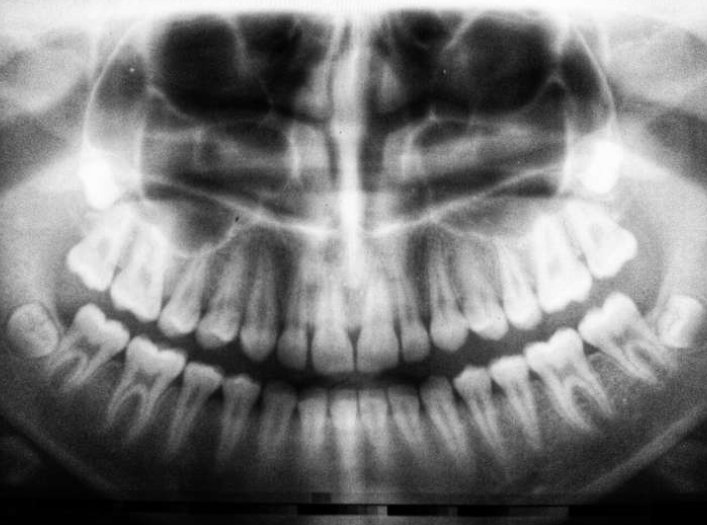
As such, the team has developed and trained an algorithm to determine the biological sex of a subject using dental X-rays with a 94% rate of accuracy.
To accomplish this, the algorithm reportedly features three components: image pre-processing, gradient-based recursive threshold (GBRT) segmentation and classification. Using what the team calls a prime magic square filter at the image pre-processing step, the researchers removed unwanted noise. Further, the prime magic square filter employed a grid of numbers, which were overlaid on the image within the computer and compared the pixel values in the image against the corresponding values in the grid. This reportedly enabled the researchers to determine distortions as well as compression artifacts that contribute to image noise and can subsequently be removed, making way for a clean image for analysis.
The researchers suggest that the GBRT segmentation approach polishes the images, thereby improving the algorithm's ability to extract information from them while the classification stage uses a Resnet50 neural network.
To train the algorithm, the researchers used 3,000 dental X-rays for which the individual's biological sex was known.
An article detailing the algorithm, “Deep learning-based gender classification with dental X-ray images,” appears in the International Journal of Biomedical Engineering and Technology.




How important is "biological sex" anyway? Having known and lived with a number of people who were born "with disabilities" I find it easy to believe there are many ways a human can be conceived and develop a little bit different. Most embryos or fetuses that develop differently just don't make it. But many survive and become genuine people. Sex or gender differentiation is a characteristic that does not always meet our binary expectations.
Why look at sex or gender and force a binary determination on someone else? Is it even anyone else's business?