Combatting climate change in the metaverse
S. Himmelstein | June 26, 2023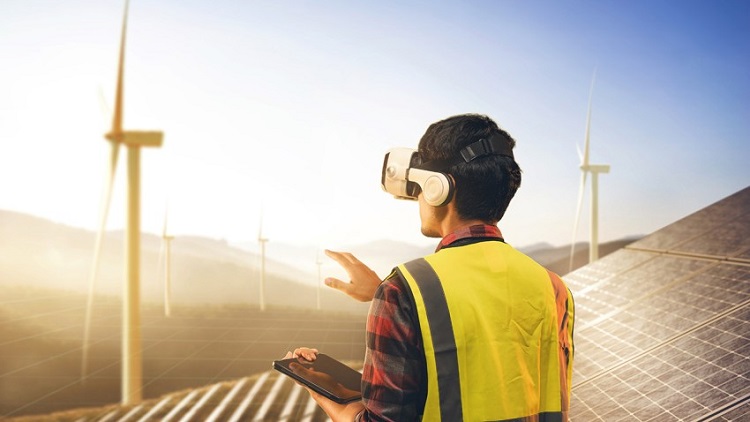 The metaverse may have a role to play in tackling climate change. Source: Cornell University
Metaverse technology is proving its merits in various educational and engineering problem-solving applications. This virtual 3D environment in which physical and digital worlds converge can also deliver environmental benefits by combating climate change trends.
Cornell University researchers contend that expanded use of the technology could lead to a lowering of global surface temperature by up to 0.02° C before the end of this century. Their analysis, published in the journal Energy and Environmental Science, applied artificial intelligence-based modeling to explore the climatic impacts of expanded metaverse usage in remote work, virtual traveling, distance learning, gaming and non-fungible token applications in the U.S.
Metaverse-based remote working, distance learning and virtual tourism will be the largest contributors to decarbonization efforts. The technology is predicted to be adopted by more than 90% of the U.S. population by 2050, potentially lowering greenhouse gas emissions by 10 gigatons. Such expansion can reduce atmospheric carbon dioxide concentration by 4.0 ppm, decrease effective radiative forcing by 0.035 W/m2 and lower total domestic energy consumption.