Answer to unplanned downtime: A heating expert in your back pocket
June 02, 2023Downtime is to be expected in the normal course of factory operations as part of a successful strategy for maintenance and repair. But among the most costly and disruptive challenges faced by industry today is unplanned downtime, a result of system failures that can be difficult to anticipate but essential to prepare for.
Several factors contribute to the cost of downtime — including a company’s size, level of specialization and mix of digital and physical assets — and it may be considerably higher than one might imagine. One industry investigation found that an average large plant loses 25 hours per month to unplanned downtime at a cost of $129 million per year. Spiraling inflation and production lines running at higher capacities, the report adds, have made unplanned downtime cost manufacturers at least 50% more today than it did just two years ago.
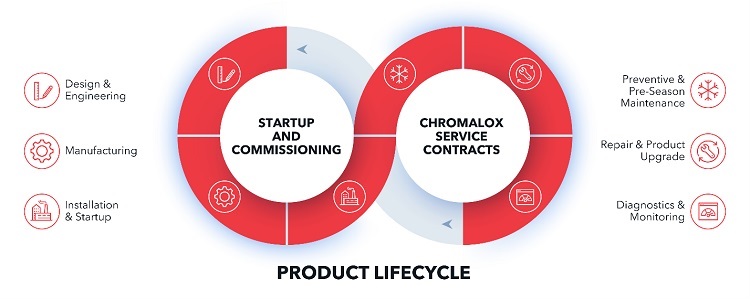 Figure 1. A customized approach to site services can mean the difference between hundreds of hours and millions of dollars in unplanned downtime, or deliberately minimal interruption. Source: Chromalox
The ability to fight these trends depends largely upon a company’s approach. A recent Forbes study on the costs of unplanned downtime notes that many plants rely on “run-to-fail” maintenance processes — or performing repairs only after equipment has broken. Compared to more efficient predictive and preventive methods, a reactive approach can translate to costs up to four times greater. Also noted, there are hidden costs to be considered: Besides labor expenses, production capacities and profit margins, there are overhead costs for utilities, parts and materials, shipping and even lost sales opportunities or risks to customer service perceptions. Not taking all of these factors into consideration can significantly impact a company’s bottom line.
An understanding of these dynamics prompted pioneer electric heating and control product company Chromalox to build site services – which offers companies help in both reducing the impact of unplanned downtime and managing costs to reduce total cost of ownership. Chromalox describes its approach as going beyond the manufacture of efficient and reliable systems to providing “a heating expert in your back pocket.” That concept is reflected in its commitment to offer research assistance on electric heating systems and requirements, generate data-based insight on plant operations and provide several types of on-site support — including commissioning and start up, training through a network of procurement channels, ongoing maintenance tracking equipment trends over time and emergency response. All of these services can free up in-house resources.
While services like these may offer obvious benefits to those who have experienced the significant costs of unplanned downtime firsthand, Chromalox also offers a few questions potential customers can ask themselves to better gauge their value. These include:
- With your current maintenance resources — internal or external — are you able to troubleshoot electric heating system failures by looking at their root causes?
- Are your electric heating systems correctly considered as critical plant equipment?
- Do you know if your electric heating systems are up to date on current regulations and certifications?
If the answer to any of these questions is “no,” site services offer a way to change that. One can start with an on-site audit, which is followed by a detailed report and an action plan. The Chromalox parts and inventory team can also map and streamline a spare part replenishment plan to keep plant processes operational, even if the system originated with another heating and control product manufacturer. In addition, Chromalox can convert fuel-fired systems to electric and utilize electric heat trace systems to maintain temperatures — and in the process, reduce a company’s carbon emissions and support its sustainability goals.
The best approach for minimizing the impact of unplanned downtime will vary by the needs of each organization. Chromalox takes an individualized approach to the challenges of extending overall product lifecycles and minimizing total costs of ownership, with services that can be customized to meet specific needs. To learn more, visit Chromalox Site Services online.