Boeing Helps Engineer a New Callaway Golf Club
Engineering360 News Desk | January 29, 2016U.S. aircraft manufacturer Boeing has developed what it says is an innovative "trigger" for Callaway Golf's XR driver that changes the airflow midswing, making the club more aerodynamic for greater driving distance off the tee.
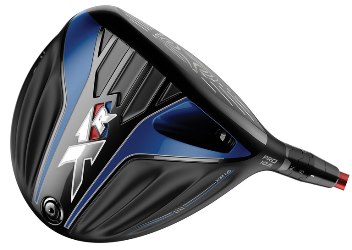 A trigger on the crown of the club changes the airflow from laminar to turbulent at the desired point in the swing. Image source: Callaway Golf."Everyone knows the modern driver head is big," says Evan Gibbs, manager of woods research and development at Calloway Golf. "All that volume can increase aerodynamic drag and decrease club head speed, which is why we've been studying aerodynamics at Callaway for quite some time. But we knew if we were going to take the next big leap, we needed to partner with engineers who studied aerodynamics."
According to Jeffrey Crouch, senior technical fellow, aero flow physics, at Boeing, aerodynamics is a critical aspect of golf because swing speed translates directly into distance. A typical professional golfer swings at a speed of approximately 120 miles per hour.
During the swing, the airflow can have two different states. The first is laminar flow—the smooth flow that is desirable for an aircraft. The second is turbulent flow, which is chaotic "with a lot of mixing," Crouch says.
"While we try to minimize turbulent flow on a plane, it can actually be helpful for an object like a golf club," says Crouch.
The reason is that during a downswing, airflow separates from the club head. This creates a wake behind the club and causes drag. With turbulent flow, air sticks to the head, the wake is minimized and there is less drag. Boeing's design for the club head uses this phenomenon to the golfer's advantage.
Using modeling software, Boeing engineers pinpointed where the greatest drag occurs during the swing. Knowing that, they designed a trigger for the crown of the club. That trigger changes the airflow from laminar to turbulent at the desired point in the swing.
"We refer to this as 'tripping the flow,'" says Crouch. "It's just a fraction of a second, but that's enough to give golfers greater head speed.” That could translate to more yardage per shot and better results on the course.