
Germany ends its nuclear power era
S. Himmelstein | April 17, 2023 Commissioned in 1988, Isar 2 was one of the last three nuclear power stations to be shut down in Germany. Source: Preussen Elektra
The last three operating nuclear power reactors in Germany have been permanently shut down. Isar 2, Emsland and Neckarwestheim 2, all pressurized water reactors, had been due to close by the end of 2022 but were allowed an extension for the winter following energy capacity concerns as a result of the Russia-Ukraine war.
According to Germany's Environment Minister Steffi Lemke, "The risks of nuclear power are ultimately uncontrollable; that's why the nuclear phase-out makes our country safer and avoids more nuclear waste." The shutdown is line with a long-planned transition toward renewable energy.
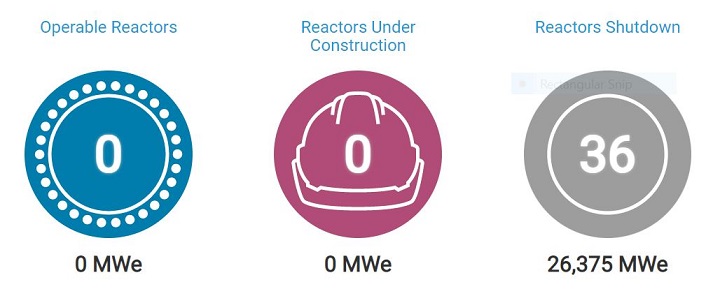 The contributions of nuclear power to the German grid have ended. Source: World Nuclear Association
Other European countries, such as the Netherlands and Poland plan to expand their nuclear power systems, while Belgium is postponing its planned phase-out. With 57 reactors, France has always been Europe's leading nuclear power country, and it intends to stay that way. All in all, 13 of 27 European Union countries intend to keep using nuclear power, with a number expanding their capacities. However, there is no indication that nuclear is experiencing a renaissance: nuclear power generation peaked at 17.5% of global generating capacity in 1996 and fell below 10% in 2021 — the lowest in four decades.
According to the International Atomic Energy Agency, there are currently 422 nuclear reactors in operation worldwide, with an average age of about 31 years.


We can all learn from Germany's experiences with their decisions regarding energy policy.
In reply to #1
Can you further explain what you mean by that comment? I can't tell if you are finding fault with their policy. And, if so, what are your concerns? Or, are you in favor of their policy? And why?
I might have you mixed up with another contributor. I thought you were pro-nuclear power. But, please forgive me if I am wrong.
Thank you.
In reply to #2
Well, last winter we witnessed what happened in Germany when their supply of Russian gas was interrupted. Fortunately, the winter was uncharacteristically
I believe nuclear power is an important component in an energy portfolio as a base load generation source. Or coal plants work well for that function too.
Solar and wind can have their place too, but unfortunately you have to have generation capacity standing by for when the wind don't blow and the sun ain't shining.
It's too bad because nuclear is the best option of providing energy that doesn't contribute much to climate change. And now Germany will be tying to buy more gas and oil from Russia.
In reply to #3
Thank you for clarifying. That is what I remember about you from previous posts you made. I am definitely in your boat on this issue. The silver lining is that Germany is a democracy. Therefore, I assume their decision, though maybe not well informed or well thought out, is their decision to make.
This is a policy error of epic proportions.
Good luck coming off of gas & coal without nuclear. Not going to happen, not in the time we need it to at least.