10 unique solutions to sticky adhesive problems
Penny Hoelscher | February 08, 2023Everyday adhesives often go unnoticed and underappreciated; but in the commercial, engineering and industrial sectors, new adhesive and sealant technologies are top of mind for innovative solutions to sticky challenges. The advantages of adhesives over conventional joining, fixing and adhering methods might surprise some.
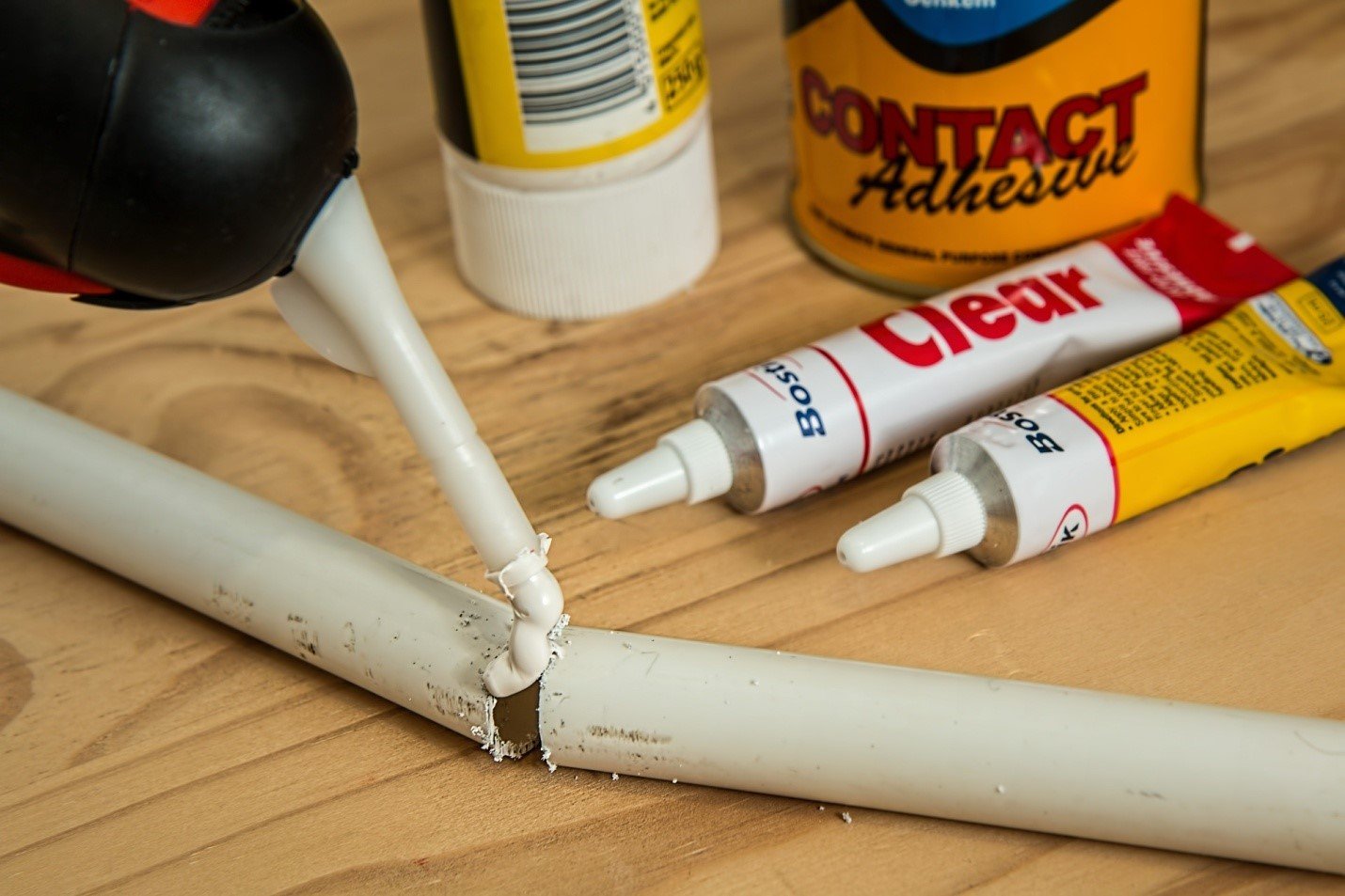 Demand from consumers and environmental regulators to reduce toxic adhesive usage grows daily.
Here are 12 examples of chemistry and mechanical engineering converging to solve difficult assembly and sealing challenges.
Self-healing sealant enters outer space
PR-2001 Class B from PPG Aerospace is a rapid-cure aircraft fuel tank and fuselage sealant used by NASA to protect the ATLAS V 541 rocket on its 2020 mission to Mars. The sealant is a two-part, epoxy-cured polythioether compound. Polythioether is a liquid polysulfide polymer with advanced plasto-elastomeric properties, the ability to withstand extreme environmental conditions, and a resistance to the adverse effects of gasoline and jet fuel. Polysulfides undergo self-healing, meaning they are able to return to their original tensile strength after being subjected to adverse operating conditions, like high temperatures or harsh chemical exposure.
Poly-free paper cups reduce carbon footprint
H.B. Fuller and HSMG have developed recyclable, poly-free beverage cups that use HSMG’s Poretean Cupkote coating and H.B. Fuller’s Swift-tak adhesives. Cupkote is a recyclable coating that replaces plastics used to manufacture single use drinking cups. Swift-tak is a water-based, cold-seal adhesive that seals the cups. According to Science Direct, better paper cup recycling could reduce the world’s carbon footprint by up to 40%.
Automotive adhesives
Popular adhesive materials in the automotive industry include eco-friendly water-based solvents, methyl methacrylates (MMAs) for lightweight construction and faster cure time, rust-free green adhesives to withstand snow and rain, and low volatile organic compound (VOC) adhesives to protect passengers from exposure to toxic chemicals. JBC Technologies manufacture high-performance, pressure-sensitive adhesive (PSA) tape to bond thin film sensors to a smart vehicle’s steering wheel to alert the onboard computer that a driver is present. Peel-and-stick adhesive solutions have a wide range of uses, from affixing number plates to attaching trim.
Edgebanding adhesives for safe home decor
Edgebanding adhesives attach workpieces like plywood and MDF to furniture edges, countertops and other spaces. Located among humans in highly visible residential locations, edebanding adhesives need to be inert, strong and easy to apply and remove. Examples include Henkel’s products, such as Technomelt KS 922 and KS 300 that use polypropylene (PP). PP is a safe for use thermoplastic in food and drink manufacturing.
Lightweight construction in maritime industry
In the ship building industry, MMAs may prove to be the lightweight solution to bonding structural parts on ships instead of using mechanical fastening techniques. Researchers estimate the use of MMA-based adhesives could reduce a vessel’s weight by 10% and increase fuel efficiency, resulting in greater ship stability. Epoxies are the most commonly used adhesives in the maritime industry. Tests indicated that MMA was half as strong as epoxy but had better elastic deformation (able to absorb 35% strain) versus epoxy (5% strain) before breaking.
Mitigating VOCs for human and environmental health
Demand from consumers and environmental regulators to reduce toxic adhesive usage grows daily; even common solvents like nail polish remover can pose health risks for consumers and workers in beauty salons. There are numerous non-toxic solutions to replace toxic counterparts like DMF, methyl ethyl ketone (MEK), acetone, toluene and xylene. D-limonene, extracted from citrus fruit rinds, is non-toxic. It is a replacement for MEK, acetone and toluene but does not conform to VOC regulations. TBF Environmental Technology Inc. manufactures VOC-compliant substitutes for toxic solvents like mineral spirits, methyl amyl ketone (MAK), and butyl acetate.
There is also growing demand for solvent-free adhesive mixture. While water is a solvent, in the adhesives industry the term usually implies the presence of chemicals. To be solvent-free, an adhesive must contain less than 5% solvents. Low-solvent or solvent-free adhesives include hot-melt, high solids and waterborne adhesives. Most polyurethane-reactive (PUR) adhesives are non-solvent replacements for solvent-based adhesives.
Debonding adhesives solve recycling challenges
One problem with bonded objects is that they are not always recyclable and can be difficult to debond for repair or replacement without breaking a substrate, like a windscreen or electronics part, or without using toxic solvents (think grout removal). One potential technology for debonding adhesives is the use of thermally expandable particles (TEPs), developed in the 1970s by Dow Chemical Company. The particles consist of thermoplastic shells filled with liquid hydrocarbon that, when heated, expand, theoretically enabling the easy separation of adhesive and substrate. Other debonding methods use electrical, magnetic, chemical, laser, liquid metal and ultrasonic stimuli.
Sticky bandages get clingier
Researchers in bioadhesive technology at McGill University found a way to control the stickiness of adhesive bandages using ultrasound waves and bubbles. Ultrasound creates microbubbles that force adhesive bandages to cling more strongly to skin. Potentially, this technology will enable medicines to be administered to patients percutaneously.
Mimicking mother nature
Researchers are continuously inspired by mother nature; one unique example being the gecko and other lizards whose sticky feet enable them to walk upside down. In Germany, researchers have developed a UV-light-controlled bioadhesive whose stickiness can be turned on and off remotely. The researchers envisage the product being used for picking up and moving equipment in factories. Geckel is a waterproof super-glue that addresses the problem of the original gecko-inspired adhesives not working very well on wet surfaces. Geckel draws inspiration from the way mussels stick to rocks by secreting a sticky protein. They use a combination of silicone and synthetic polymer to mimic the adhesion capabilities of the two creatures.
Medical wearables make healthcare easier
Intelligent medical adhesive plasters called smart patches are used to monitor patient vital signs, like their heart rate or breathing patterns, remotely. They enable patients themselves to monitor blood glucose levels and administer insulin when necessary. In the future, these smart patches will deliver medication to patients via actuators.
To stay up to date on all things fastening, joining and assembling, subscribe to GlobalSpec's free newsletter today.