
Drilling failure or natural gas migration? Colorado researchers determine source of oil and gas well leaks
Marie Donlon | February 12, 2023Researchers led by a team from the University of Colorado Boulder are seeking to determine the source of gas leaks into household water wells near oil and gas drilling sites, distinguishing whether they are the result of a failure in drilling or of the natural migration of gas.
“When gas leaks from an oil and gas well, its geochemical composition varies depending on the depth of the formation it came from. We’re analyzing that composition and can know if it’s from the producing formation at the bottom of the well or if it’s from somewhere closer to the surface,” the researchers explained.
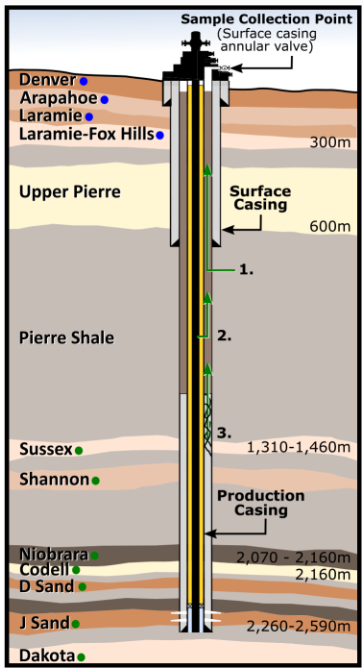 Source: University of Boulder
The researchers revealed that the majority of dried wells consist of a network of nested pipes and cement, wherein only the innermost pipes carry produced oil and gas, thereby preventing leaks.
However, data from a densely drilled region in northern Colorado suggested that almost 27% of oil and gas wells demonstrated a buildup of gas, oil and water in the outer pipes — an indication of leaking.
As such, the team looked at publicly available data about these wells and analyzed the chemical composition of these leaks, determining that the source of most is well pipe or cement failure — not natural gas migration.
The researchers suggest that being able to determine the source of such leaks could have implications for homeowners and drillers alike and could also be used to protect groundwater in the future.
An article detailing the research, Composition and Origin of Surface Casing Fluids in a Major US Oil- and Gas-Producing Region, appears in the journal Environmental Science and Technology.


