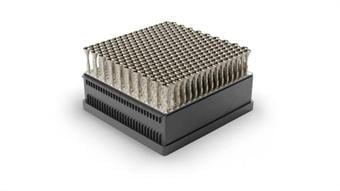
Space Drill Technology Yields Portable EV Charger
By Engineering360 News Desk | January 11, 2016Engineers developing a drill for probing Mars, the Moon and asteroids have created what they say is a portable charger that can power up electric vehicles (EVs) anywhere, anytime.
Under a contract with the European Space Agency, Norwegian company Zaptec developed a plasma drill for slicing through rock, as well as an accompanying power supply. It draws about the same voltage as a household vacuum cleaner.
The company has signed an agreement with Renault Norway to provide the charging technology for all of the automakers' EVs sold in the Norwegian market.
Rotary drills are inefficient in space,” says Zaptec CEO Brage Johansen in explaining the technology. “They suffer friction in the borehole and require heavy equipment.”
An enabling technology of the plasma drilling system the company developed is its ability to deliver high-energy plasma discharges via low mass and low-volume power transformers located in the drill head section.
“On Mars we have only 100 W available, and we can run the whole system below that using solar power and small batteries,” says Johansen. “We realized that the same transformers we were developing for the space drill could also make the best chargers for electric cars.”
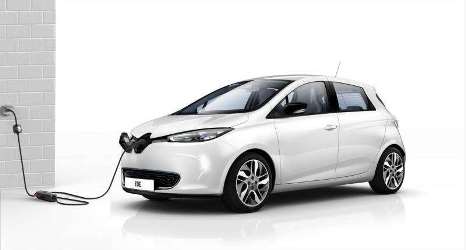 Zaptec has signed an agreement with Renault Norway to provide its charging technology for the company's Norwegian-sold EVs. Image credit: Zaptec.Zaptec’s innovation lies in the compact transformers that provide the voltage for the plasma spark—the product of advanced cooling techniques and miniaturization. The transformer, similar to the box on a laptop cable, converts power from the grid to maintain a stable supply and reduce charging times.
The electronic transformer's size made it possible to integrate it with an EV charging cable, giving it the functionality of a larger charger station. The result—according to Zaptec—is one of the world´s first portable charging stations with a built-in electronic transformer. Zaptec says the system continuously examines the grid, and adjusts the amount of power it can securely serve to the device. In the event of a power fault, it shuts off to protect the device.