Monitoring solutions for cutting machines
October 04, 2022Machining technology has been advancing at an extremely rapid pace. By many accounts, developments in tooling and machine technology have quadrupled productivity in the last 10 years. But that performance comes at a price, and the sophisticated tools and machines that make it possible are significantly more expensive than those used a decade ago.
That fact presents end users with a dilemma. On one hand, it’s imperative to get the greatest possible number of parts per tool to justify the cost. On the other, it’s equally essential to avoid breakage or other catastrophic damage to those expensive tools.
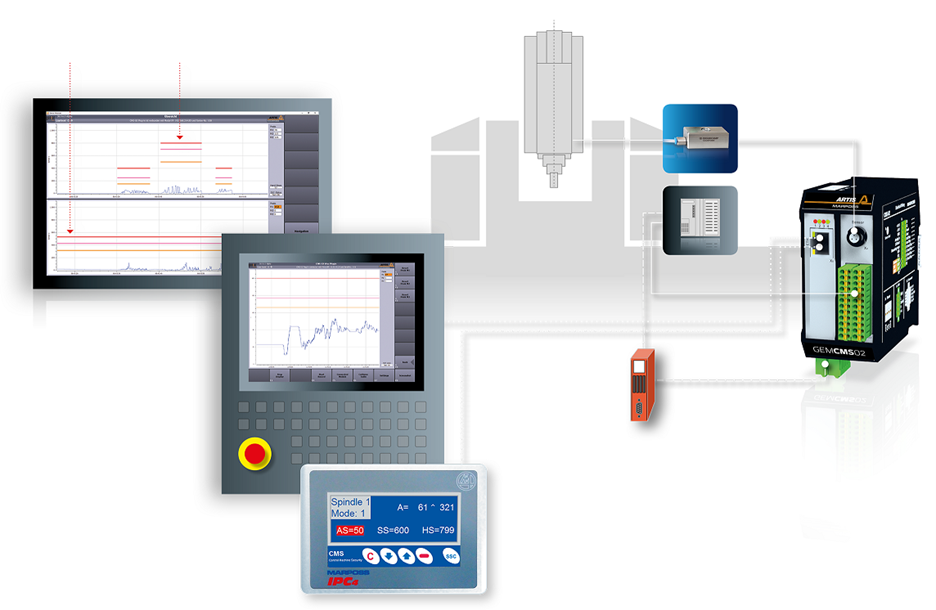 Figure 1: Monitoring solutions for cutting machines. Source: Marposs
Manufacturers traditionally have relied on experience-based “rules of thumb” and tool suppliers’ expected tool life recommendations to take tools out of service before catastrophic failures occur. In fact, it’s not uncommon for machine builders to embed these limits in their control algorithms and force machine shutdowns for tool changes after an arbitrary number of parts are produced.
The solution to both productivity and quality can be found in real-time machine monitoring, capable of detecting tooling and process issues prior to equipment failure or scrapped components. Sensors integrated in the machine components can provide continuous monitoring of metalworking processes by collecting data on a variety of operating conditions —static and dynamic force, vibration, power, temperature and others. From this data, the systems learn the normal limits of the process. The control unit then observes the signals of each cycle and compares it with the stored curve; if the signal moves outside of the envelope curve, the machine shuts down or a part is sorted out. This allows the operator to experiment and optimize processes as both visibility and safeguards are built into the system.
Practical results
Working with one of the traditional Big Three U.S. domestic automakers, a Marposs-Artis monitoring system has produced impressive tooling cost reductions and productivity improvements. To date, the system has been installed on 98 machines in four major plants in the U.S., Mexico and Brazil to support a major new transmission program.
In the pilot installation, the system generated annual tool cost savings of $17,000 per machine, which translates to $1.5 million per year for that plant alone. The plant, which uses 10 different tools, had previously set a standard of 6,000 “hits” per tool before taking it out of service for re-sharpening. With the monitoring system in place, the same tools are now producing an average of 12,000 hits per re-sharpening with no increase in damage or catastrophic failures.
Many of the newer machines in those plants were delivered with embedded pre-set hit count limits in the control software. When the limit is reached, the machine stops automatically regardless of actual tool condition. This feature is now turned off on all machines equipped with the Marposs-Artis monitoring system because the automaker is confident in its ability to both optimize productivity and protect the tools.
During one of the test sequences, the automaker recorded a sudden drop in tool life on one machine from about 11,000 hits to 3,200 for no apparent reason. Examination showed the tools to be in acceptable condition when removed, but the monitoring system was detecting an abnormal situation.
Further investigation revealed that the problem being reported was not tool related at all, but due rather to a deteriorating spindle bearing. That particular fault was not specifically programmed into the software but was nonetheless detected and reported before the tool was damaged. Several other users of the system have reported similar occurrences.
The European transmission builder who partnered with Marposs on the Artis monitoring solution during system development also has U.S. plants using the system. In testing on two different machines, a Liebherr and a Felsomat machine, the system increased productivity from 700 parts per tool to more than 1,000 with no changes to the process. As a result, all 42 machines in the plant have been retrofitted with the monitoring system.
During the testing in that plant, it was discovered that tools from one supplier experienced coating failures at a higher rate than those from other suppliers. Using data from the test, the customer was able to work with the supplier to remedy the situation and bring the life of those tools up to the expected standard.
Had the tools simply been taken out of service after a fixed number of cycles, as was previously done, the coating fault would never have been discovered. Here again, the ability of the system to detect, quantify and record real-time operational data was a key factor in diagnosing and resolving a situation with a negative impact on productivity that would otherwise have gone unrecognized and unresolved.
In another instance, an aerospace customer was tasked with improving a gear hobbing operation where the hob cutters had historically been run to a set number of passes as indicated by the tool manufacturer specification. They wanted to improve detection of worn tools, reduce scrap resulting from chip weld, and improve tool life. Actions were taken to address these issues including changes in cutting speeds and feeds, implementation of fixed-position air blow-off knives, increased changeover of the hob cutter, and a modification to two-pass cutting. However, none of these achieved the desired objectives, so a Marposs-Artis integrated monitoring system was implemented.
This system enabled the tool wear to be identified based upon actual power draw instead of pre-determined specs. Visibility into the data enabled tools to be run longer, resulting in a 64% tool life improvement as well as optimizing cycle times.
Although increased productivity, lower cost and improved quality are obvious benefits of real-time monitoring, there are other compelling reasons to implement this strategy. Monitoring solutions involve data capturing, data processing and the aforementioned visualization — all of which are extremely important for a few reasons. First of all, the data documentation capability fulfills traceability requirements for manufacturers. And secondly, this data supports the move toward the industrial internet of things (IIoT), where there will be an ongoing exchange of information via autonomous intelligent systems, delivering a real-time image of current production processes. This information is gathered from sensors such as those used in these monitoring solutions, delivering information from devices and machines to the internet, monitoring their condition, improving the performance of a production line, and creating time and cost savings.
In short, real-time monitoring of production processes not only provides immediate benefits but lays the foundation for the future. It is a critical strategy in the ongoing quest to optimize performance, improve quality and reduce costs. Manufacturers who streamline their machining processes by investing in a sophisticated monitoring strategy will be better positioned to meet the demands of this industry today while preparing for tomorrow’s Industry 4.0.
To learn more, visit the Marposs website.