Building an FMS: Key elements of flexible manufacturing systems
November 14, 2019Flexible manufacturing systems (FMSs) are manufacturing systems that can react to predicted or unpredicted changes. An FMS consists of work machines, a central control computer and a material handling system. The central control computer controls the material movements and machine flow while the material handling system optimizes parts flow and connects the control computer to the work machines. Typically, these systems do not follow a fixed set of steps.
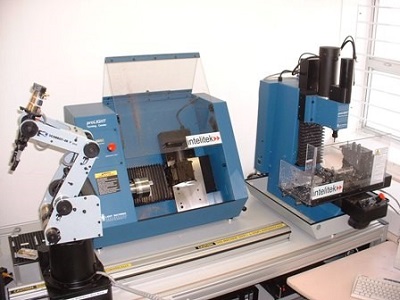 Figure 1: An FMS. Source: Vadt/CC BY-SA 3.0An FMS improves efficiency and lowers production costs because the machines can seamlessly switch production if a different product is necessary. The machines can also switch operations when one machine in the system goes down, continuing production even though there is a broken machine. For a system to be an FMS, the system must be flexible at every step of production.
To fully understand how an FMS works, one must know the key features of an FMS system. Below are five key features and why they are important to the success of an FMS.
Cells
A cell in an FMS includes one or more flexible CNC machining tool or machining center. All the machines are computer controlled and programmed to change production quickly. Cells are linked together through an automated material handling system. The cells are adaptable to changes in various production conditions, giving the producers more freedom to produce different parts. Machines within a cell can automatically change tools or fixtures to produce different parts.
Random bypass capability
Random bypass capability permits a machined part to be moved from any tool within the system to any other tool in the system. Because the part can bypass tools along the path, each part must be able to travel through any part of the system before it reaches its destination. Random bypass capability results in a greater diversity of parts and capabilities within the system. This also makes it possible to produce a variety of products.
Automation
Automation is a major flexibility feature in an FMS. Automated computers provide instructions that direct the actions of the whole system. The computers also monitor feedback from the machines to save production when a machine breaks down or the system needs to produce a different part. There are several components within an FMS, each with their own type of computer control, monitoring and directing the actions of the components. Computers have their own communications protocol based on the data needed to control the system. The computers also transmit status information to managers, eliminating the need to physically monitor production.
Component redundancy
In production, if one part or machine stops working, it affects all the other components. This can cause long production delays in non-flexible production. But in an FMS, if one machine fails, component redundancy ensures that the production process is forwarded to a machine that can do the equivalent work. The equivalent machine will continue production while the broken machine is fixed. This guarantees uninterrupted production and is another example of flexibility within an FMS. Because each machine has at least two production options, this opens a new door for production potential.
Multiple paths
An FMS is composed of multiple paths. A path includes the instructions sent to a machine by the managers to produce a part. In an FMS, the machines can understand multiple paths for flexible manufacturing. The higher number of paths a machine can understand, the higher degree of flexibility a system has. A truly flexible FMS can make a part, variations of that part and a completely different part with minimal delay in production. With multiple paths, it is easier to halt production if a product does not sell and switch to producing a high-selling product.
Together, these features make an FMS extremely flexible. There are many reasons to use an FMS in production. An FMS saves time and money while increasing overall efficiency and production. These systems are ideal for companies who produce a wide variety of products. Contact Radwell International for more information about FMSs.