Proper Power Plant Layups Are Critical to Reliability
Victor Rodgers | January 14, 2016With electricity produced from natural gas displacing coal-fired generation, and in response to reduced or seasonal dispatch demands, a new world of operation has emerged. Units designed for baseload service are now, in addition to load cycling, being placed into reserve shutdown for several weeks or months at a time.
Along with the unforeseen thermal stresses shutdowns/startups bring to pressure parts, improper or non-existent layup strategies also inflict damage. For many large coal-fired units, layup practices were never a concern. However, the current environment of increased starts or extended shutdowns have thrust layups into focus as a reliability risk.
Improper Layups
Improper or non-existent layup practices continue to plague the U.S. coal fleet and contribute to boiler tube failures and steam turbine pitting or cracking, both chief causes of plant unavailability. For some plants, the layup duration is not defined or made clear. Short-term outages often turn into long-term outages as market conditions change. Layup processes are often delayed as management faces uncertainty over when the unit will next be dispatched.
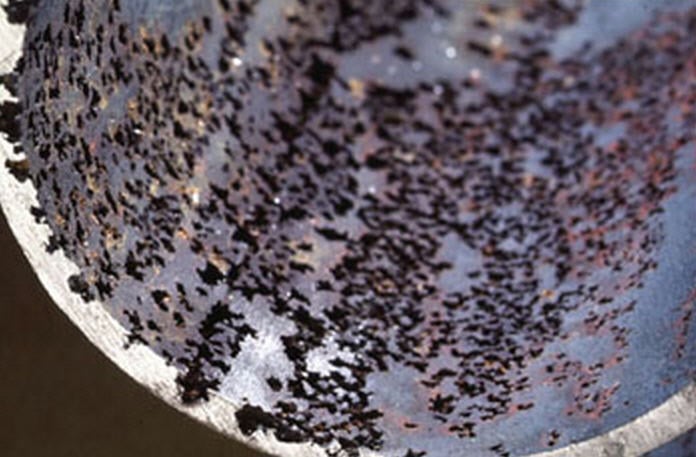 Boiler tube pitting caused by exposure to oxygen. Perhaps most troublesome is when systems are left in an uncontrolled status, sometimes shut down for extended periods, and oblivious to the layup techniques. Layup techniques such as dehumidification or nitrogen blanketing require technical, time and capital resources. As appropriate layup procedures differ with outage duration, plants frequently struggle to plan for and adapt to a moving target.
Poor or nonexistent layup practices allow oxygen and water to stay in contact with boiler tubing, drums and headers. The occurrence of salts, especially chloride salts, provide a nearly perfect environment for the corrosive effects of water and oxygen to impact these metal surfaces. Corrosion fatigue is a primary failure mechanism among boiler tubes. The “fatigue” moniker represents the mechanical and thermal stresses impacted by unit cycling. With every cycle, the protective magnetite oxide layer of the components crack and exposes metal surfaces to the boiler water. Pitting is the predominant form of layup-induced corrosion and exacerbates other mechanisms such as stress corrosion cracking and under-deposit corrosion.
Improper layup practices also impact steam turbines. When exposed to atmospheric conditions and placed directly above a warm and moist hotwell, the turbine blades are immersed in the humid conditions that are conducive to pitting, the forerunner to corrosion fatigue. Pitting and corrosion mechanism risks depend not upon the duration of the time offline, but on the preservation measures that are implemented during the unit shutdown process. Recurrent, short-lived outages can introduce much greater corrosive damages than infrequent, long scheduled outages.
Correct Layups
Good layup practices view the unit holistically to include the entire water/steam/condensate cycle. Differing strategies may exist depending upon specific unit designs or operational factors. Each equipment component should be stored and protected from the in-service, shutdown and layup periods all the way through startup and return to service. Ideally, comprehensive layup procedures should exist for each unit with variances for shutdown duration and expected return to service. The principal objective of correct power plant layup is to maintain the plant in a state of preservation which safeguards important systems and equipment and enables return to service without compromising plant integrity.
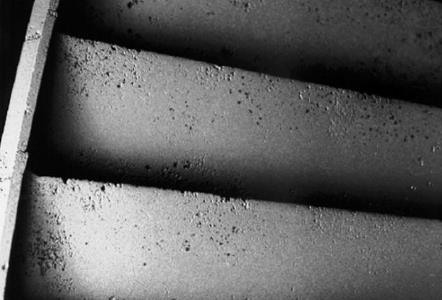 Steam turbine blade pitting resulting from corrosion fatigue Each layup event must be evaluated on a case-by-case basis to determine the correct strategy for each system. Although traditional terminology suggests only “wet” or “dry” layup, various layup techniques may be used to best align with an individual unit’s needs. These techniques may include:
• Drained
• Shutdown “as is”
• Continued circulation
• Wet layup
• Wet layup with nitrogen blanketing
• Dry layup with dehumidified air or nitrogen blanketing
Planning is Critical
Correct layups involve significant planning. The roles, practices and procedures must be identified prior to every shutdown. Plants with effective layup practices largely integrate the following:
- Standard procedures are written and memorialized which specify the roles, responsibilities and accountabilities related to layup activities
- The scheduling of various layup-related tasks during outage planning cycles
- Development of unit-specific decision-tree diagrams which dictate layup method selection
It is critical for plant personnel to have sufficient information to make good decisions on how to best perform system or unit layup prior to each shutdown opportunity. Frequently, a corporate or program-level individual is employed to lead such efforts fleet-wide. A corporate focus ensures high levels of visibility, accountability and consistency across the organization. The correct review of each plant’s equipment, systems and operating regimen provides personnel with the ability to create tools that aid in properly protecting plant equipment. Tools can take the form of decision trees, flow charts or other graphical representations.
Layup is nothing new to coal-fired power plants. Plants have been tasked for years with protecting equipment during shutdown periods. Recent industry influences, however, present new scenarios that increase the importance of laying up generating units for extended periods of time. These scenarios now influence fleet decisions on a unit basis from hour to hour rendering plants susceptible to fickle dispatch decisions at the expense of equipment reliability – a strong case for having a robust layup program.