Smarter water management with a wireless network
S. Himmelstein | August 22, 2022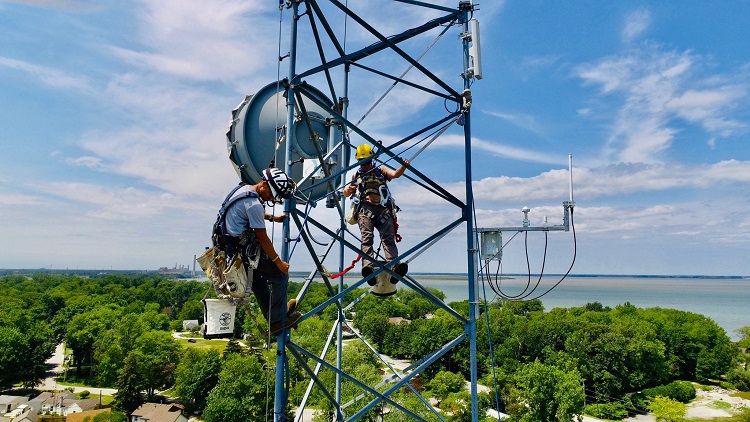 A telecommunications gateway was installed at the University of Toledo’s Lake Erie Center. Source: Cleveland Water Alliance
A specialized wireless network is now being installed to extend connectivity across area wetlands, parks, coastlines, rural and urban areas, and the open waters of Lake Erie. As part of the Cleveland Water Alliance’s Smart Lake Erie Watershed initiative, the regional telecommunications project will improve the ability to monitor and manage area waterways and provide opportunities for area businesses, cities and universities to accelerate water technology development.
Gateway radios have been installed on the campuses of the University of Toledo and Case Western Reserve University, as well as on the William Mather ship docked at the Great Lakes Science Center and atop the Anthony J. Celebrezze Federal Building in downtown Cleveland. Additional gateways are planned along the Ohio shoreline and other key inland and urban areas across northern Ohio.
Each gateway site can communicate and receive data from tens of thousands of remotely deployed sensors within its listening area, which can be located up to 20 to 30 miles away over open water. Environmental and other data received by each gateway is then relayed to the internet and on to cloud-connected servers and data dashboards. Water-focused uses of this Long Range Wide Area Network include deployments of sensors to track toxic algal blooms, chemical spills, urban flooding and other applications that require dozens to hundreds of sensors to track.
The first uses of the new network include transmitting data from specialized buoys that monitor water conditions offshore for the Cleveland Water Department near its water intakes.