Video: New life for cracked auto glass
S. Himmelstein | April 29, 2022A multi-stage process for recycling cracked automobile glass is the focus of a pilot project launched by Audi, Reiling Glas Recycling, Saint-Gobain Glass and Saint-Gobain Sekurit. The development of a closed material cycle will enable Audi to install new car windows derived from damaged glass panes in Audi Q4 e-tron series production.
The process starts with delivery of non-reparable windows from the Volkswagen Group’s retail network to Reiling Glas Recycling, where the discarded glass is broken up into small pieces. Wires, metals and other constituents are removed by magnets, non-ferrous metal separators, extraction units and electro-optical sorting units.
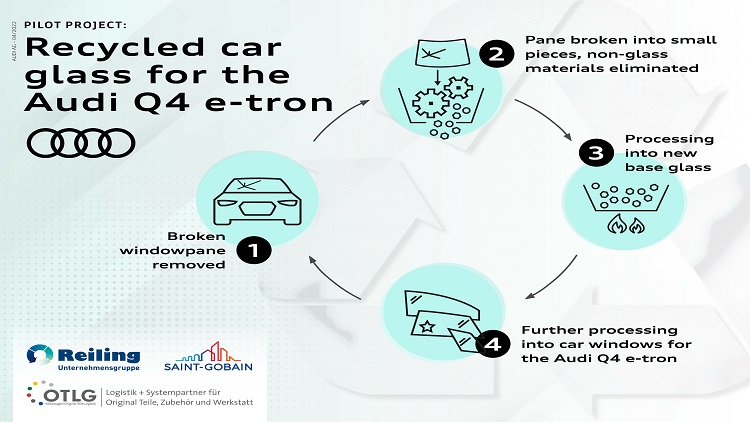 Recycled car glass for the Audi Q4 e-tron. Source: Audi AG
Saint-Gobain Glass next sorts the material and mixes the granulate with quartz sand, sodium carbonate and chalk. The proportion of recyclate to other materials is currently in the 30% to 50% range in a pilot program targeting about 40 tons of recycled car glass. After rectangles of about 3 m x 6 m are formed, Saint-Gobain Sekurit produces new automotive plate glass windows through an additional process.
The strategy is expected to result in significant savings in virgin raw materials and in carbon dioxide emissions.