Finland Approves Nuclear Waste Disposal Facility
Engineering360 News Desk | November 26, 2015The Finnish government has granted a license to Posiva Oy to construct a spent nuclear fuel encapsulation plant and disposal facility, one of the first in the world. Construction work under the license can begin before the end of 2016, with the facility slated for operation in 2023.
The Onkalo waste repository will be built in granite bedrock on Olkiluoto Island in western Finland approximately five kilometers from the existing Olkiluoto Nuclear Power Plant. Excavation of an access tunnel began in 2004 and eventually reached 455 meters, enabling engineers to study the rock's geology, hydrology and geochemistry.
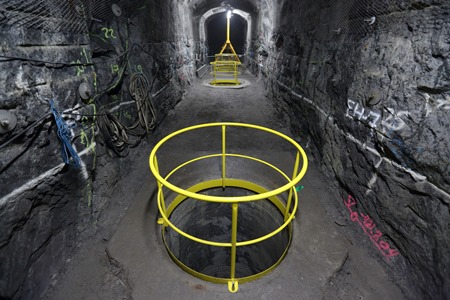 Inside the Onkalo tunnel. Image credit: Posiva Oy.The repository is based on the KBS-3 method of nuclear waste burial, developed in Sweden by Svensk Kärnbränslehantering AB. It involves packing the spent nuclear fuel inside copper and cast iron canisters at the encapsulation plant, from where they may be transferred into the tunnels of the disposal facility at a depth of 400–450 meters. Deposition holes are lined with bentonite clay designed to protect the canisters from potential jolts in the bedrock.
The facility's capacity is 6,500 metric tons of spent fuel, which will come from Finland's two nuclear plants, the Olkiluoto plant and one in Loviisa, 370 kilometers to the southeast.
Onkalo will be monitored "throughout [its] service life," says Finland's Minister of Economic Affairs, Olli Rehn. The repository is expected to be large enough to accept canisters of spent fuel for roughly 100 years, at which point the access tunnel will be backfilled and sealed.
The Finnish government included several conditions in awarding the construction license. When applying for an operating license, Posiva must submit analyses concerning the environmental impacts of the facility, the retrievability of the spent nuclear fuel, the transportation risks involved and any changes that may have been introduced into the project.
Posiva estimates its initial construction costs at just under one billion euros, with operational expenses for 100 years adding approximately a further 2 billion euros.