Coating promises to reduce implant rejection
Marie Donlon | August 12, 2021A special polymer coating designed by a researcher at the University of British Columbia (UBC) promises to reduce the incidence of rejection following an organ implant.
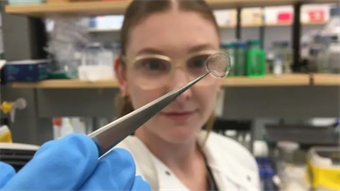
Understanding that blood vessels within organs are protected by a coating of specialized sugars capable of suppressing the immune system’s reaction, UBC medicine professor Dr. Jayachandran Kizhakkedathu from the Centre for Blood Research and Life Sciences Institute sought to mimic this sugar-like coating, which is damaged as organs are procured for transplantation.
As such, Dr. Kizhakkedathu's team developed a polymer to replicate these sugars and also developed a chemical process for applying the coating to the blood vessels of the organs to be implanted. According to Dr. Kizhakkedathu, the coating could potentially eliminate the need for anti-rejection drugs — that oftentimes demonstrate serious side effects — which transplant recipients rely on for preventing their immune systems from attacking a transplanted organ as a foreign object.
So far, the polymer prevented kidney implant rejection in lab mice when applied to blood vessels, but hopes are that the procedure will work as well on human organs in the future.
"We're hopeful that this breakthrough will one day improve quality of life for transplant patients and improve the lifespan of transplanted organs," said Dr. Kizhakkedathu.
The findings were published in the journal Nature Biomedical Engineering.