New solvent creates greener solar cells
Siobhan Treacy | May 21, 2021Researchers from Swansea University’s Specific Innovation and Knowledge Center found a way to replace toxic and unsustainable solvents commonly used in next-gen solar panels.
Toxic solvents have been a major barrier in the large-scale manufacturing and commercialization of printed carbon perovskite solar cells. These solvents are used to control the crystallization of perovskite during fabrication but are banned in many countries because of their toxicity and psychoactive effects. This restricts large-scale manufacturing and international research.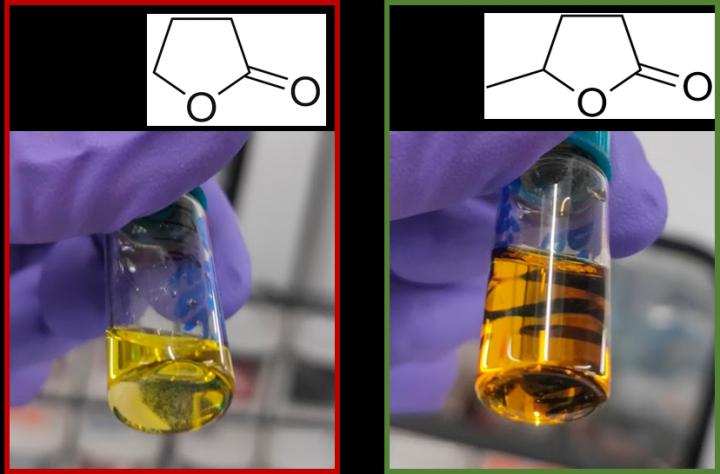 Left - solvent normally used to make solar cells, which is toxic. Right - new green solvent developed by Swansea University researchers from the SPECIFIC project Source: SPECIFIC, Swansea University
The new non-toxic solvent, y-valertolactone, is biodegradable and could replace current solvents without impacting cell performance. The new compound is composed of sustainable, biodegradable and nontoxic feedstocks and is suitable for large-scale manufacturing.
Solar cells need to be just as green as the energy they produce. These problems need to be solved before this technology can become a commercial reality.
A paper on the new solvent was published in Energy Technology.