
Watch patches replace plugs during Porsche Taycan production
Engineering360 News Desk | April 15, 2021A new production process developed by Porsche AG in collaboration with Tesa SE streamlines the sealing of holes in car bodies during manufacturing. These holes are necessary for corrosion prevention and to provide access to all body cavities in the paint shop. The solution relies on sealing patches instead of plastic plugs, and is being applied to production of the all-electric Porsche Taycan.
A robot places more than 100 sealing patches automatically, quickly and reliably, thereby sealing the holes in 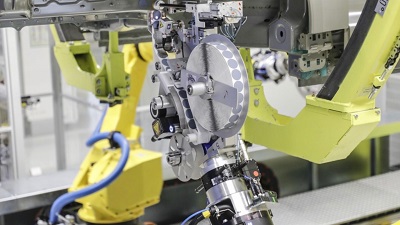 Source: Porsche AGthe body and optimizing efficiency in vehicle production. Porsche Innovation Management saw to the adoption of the sealing patches, and by July 2020 more than two thirds of the approximately 150 plugs in the Taycan paint shop had been eliminated.
The patch process relieves considerable strain on employees, and its adoption has eliminated a strenuous process step in which up to 3,600 plugs per shift had to be pushed into the holes. Logistical advantages and reduced complexity are additional benefits, as one patch size can be used to cover all four hole types. With a thickness of just one millimeter, the patches barely protrude at all, whereas the plugs extend up to 6 mm outward from the car body.




This is the same argument used by industry in removing from the production line of the guy screwing toothpaste caps on by hand and the associated " strain " . By removing this step from the manufacturing process, fewer workers are required and the end result is lower operating costs and increased profits.