Automation and machine learning improve accuracy in nanofiber fabrication assessment
Amy J. Born | April 15, 2021A new automatic process to assess quality in nanofiber fabrication produced results 30% more accurate than current assessment techniques.
Due to unique electric, mechanical and other physical properties that result from their tiny size, nanofibers are leading-edge technology in fields such as biomedical engineering, clean energy and water control. Architecture of the proposed hybrid unsupervised and supervised machine learning system. Source: Cosimo Ieracitano et al.
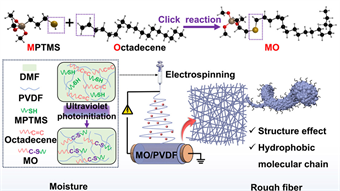
To produce nanofibers, a high voltage is applied to a syringe containing a polymer solution. The electric charge causes the solution to jet out onto a spinning collector. This can produce nanofibers that contain deformities, for example lumps or holes, or that have a film, all of which are detrimental if uniformity is required, as in the case of nanofibers used as scaffolding to grow cells. Cell growth will be uneven or the cells may not grow at all.
Technicians use a scanning electron microscope to determine precisely the topography and composition of the fibers, then visually inspect the images. The process to prevent anomalies in the fiber production is time consuming and subject to human error. This is where automation is useful.
"In the production chain of nanomaterials, a crucial step is to practically implement automation in the defect-identification process to reduce the number of laboratory experiments and the burden of the experimentation phase," said paper author Cosimo Ieracitano, research fellow in the Neurolab Group, Department of Civil Engineering, Energy, Environment and Materials, University Mediterranea of Reggio Calabria, Italy.
The research team's two-part automatic process began with a form of machine-learning software, an auto encoder that cuts the images into small pieces and translates them into code. The code is turned into more basic versions of the original images in a process requiring less computing power to highlight anomalies. A second machine-learning processor assesses the image for structural flaws and dismisses any defective nanofibers.
"Notably, the proposed system outperforms other standard machine-learning techniques, as well as other recent state-of-the art methods, reporting an accuracy of up to 92.5%," Ieracitano said.
Researchers from Politecnico of Torino (Italy) and Edinburgh Napier University also contributed to this study, which is published in IEEE/CAA Journal of Automatica Sinica, a joint publication of the IEEE and the Chinese Association of Automation.