Continuous flow chemistry: Driving smarter, faster, more efficient processing
Diana Aoun | October 12, 2026Continuous flow chemistry is a manufacturing approach in which reactants are continuously pumped through a controlled reactor environment, undergoing reaction in real time as they traverse tubing or microreactor channels before exiting as the final product. In contrast to traditional batch processing, which operates in discrete cycles involving filling, reacting, emptying and cleaning, continuous flow systems operate without interruption. This configuration enables precise control of temperature, pressure and residence time, resulting in safer, faster and more scalable processes across many reaction types, including high-temperature and high-pressure reactions, metal-catalyzed reactions, and photochemical or electrochemical processes.
In traditional batch processing, a reactor is filled with reactants, allowed to react, then emptied and cleaned for the next cycle. While this method can offer flexibility for facilities producing multiple products with shared equipment, it can be time-consuming, difficult to scale, and bears some safety risks for hazardous or exothermic reactions. Manufacturers are therefore increasingly considering continuous processing as an alternative, driven by rising raw material costs, supply chain challenges and labor shortages.
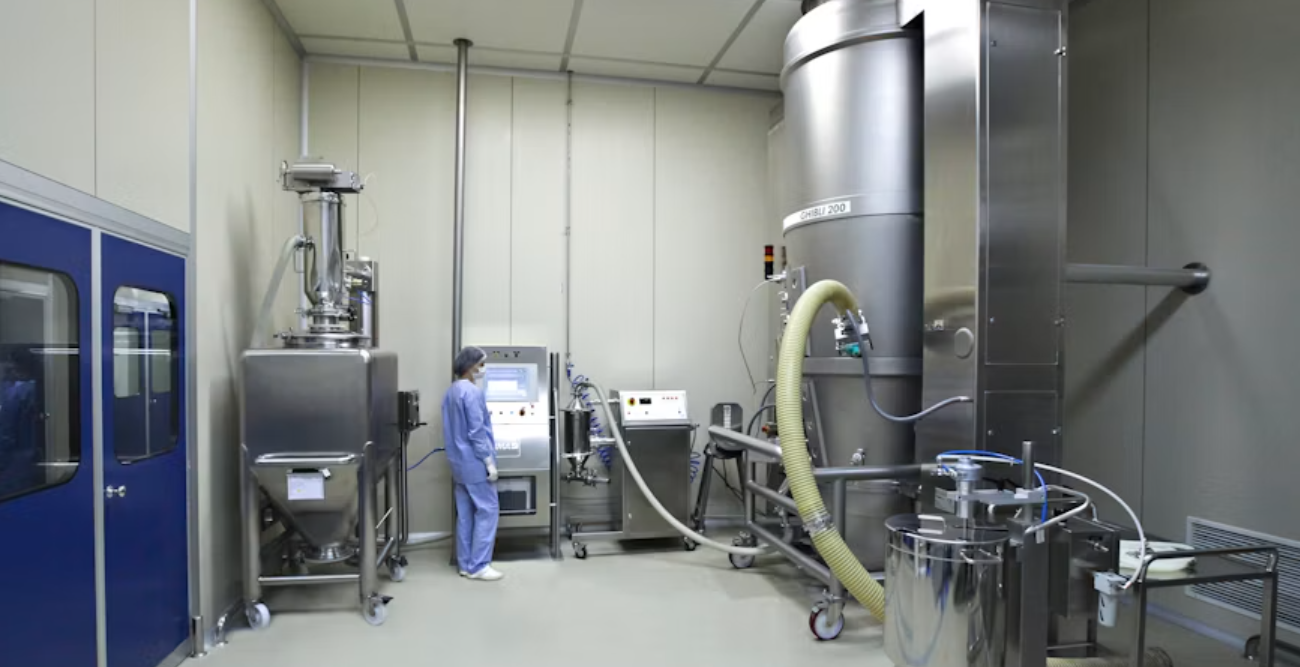 Source: Adrian Sulyok/Unsplash
Technology fundamentals
Continuous flow systems consist of integrated components, including pumps, reactors and temperature control equipment. Modern systems use modular microreactor platforms with channels thinner than a millimeter. This small size creates a large surface area relative to the reaction volume, allowing heat to transfer more quickly and reactions to proceed more efficiently.
Application areas and recent trends
Various industries, particularly the petrochemical industry, have adopted continuous-flow chemistry for over a century — it is by no means a "new" technology. Applications involving high-temperature, high-pressure, hazardous, photochemical, electrochemical and metal-catalyzed reactions have long relied on its advantages.
The current expansion into new industries marks a significant shift. While pharmaceutical adoption has been comparatively slower due to the complexity of drug manufacturing, momentum is building. Multiple drug products have received FDA approval using continuous flow processes in recent years, signaling growing regulatory acceptance of the technology.
In January 2025, the FDA issued draft guidance on complying with 21 CFR 211.110, which directly addresses continuous manufacturing and describes how manufacturers can incorporate process models into commercial control strategies, reducing some of the regulatory uncertainty that has held companies back from adopting this technology.
Beyond pharmaceuticals, continuous flow chemistry supports green chemistry by reducing solvent use, lowering energy consumption, generating fewer by-products and improving the safe handling of hazardous reagents. This expansion is driven by stricter environmental regulations, sustainability goals, demand for specialty chemicals and and growing regulatory recognition of continuous manufacturing as good manufacturing practice (GMP)-compliant. Reaction types and process formats adopting the technology because of these drivers include photochemistry and continuous stirred tank reactors for slurries or solid precipitates.
Technical advantages over batch processing
Continuous processes use smaller equipment and hold less hazardous material at any given time, reducing the risk of dangerous reactions. Packed-bed reactors with metal catalysts can be reused many times and operate safely at high temperatures and pressures, though equipment design at production scale typically requires customization to meet specific process requirements. For very fast reactions, mixing can be controlled by adjusting flow rates or using specialized mixers. Continuous processes also avoid the frequent stops required for cleaning batch equipment, thereby reducing energy use and the facility footprint.
Considerations and limitations
Batch processing remains a better choice for facilities that make multiple products with the same equipment, especially when the cost of switching to continuous processing cannot be justified.
Clogging is a common problem in continuous systems. Solutions include using better solvents, changing flow rates or widening reactor tubes, but these do not always work. Engineers are testing continuous stirred tank reactors to handle slurries and solids.
Scaling up from lab to production is challenging because larger reactors mix less efficiently. One alternative is to run many small reactors in parallel rather than one large one.
Separating and drying the final product remains difficult in continuous systems. Many facilities use a hybrid approach: continuous reaction followed by batch processing for finishing steps.
Finally, many chemists and engineers are trained only on batch equipment and lack familiarity with tube-based reactors. High costs and uncertainty about scaling up also inhibit adoption.
Emerging technologies and future directions
Automation reduces human error and speeds up reaction optimization, with integrated software adjusting flow rates, temperature and pressure in real time. Sensors placed directly in the flow stream enable continuous monitoring, and artificial intelligence can analyze this data to predict optimal conditions without human input. Meanwhile, new reactor designs (e.g., for photochemistry, electrochemistry and gas-phase reactions) are expanding what continuous flow can achieve. Three-dimensionally printed reactors allow rapid testing of novel designs, though current materials have chemical compatibility limits.
Implementation pathways
Switching from batch to continuous flow requires a deep understanding of the reaction chemistry. It is important for companies to determine whether they should form a dedicated process development team or hire outside experts. Engineers should also first define acceptable ranges for pressure, temperature and reaction time, and understand potential side reactions. Multiple process designs can then be modeled to compare costs and environmental impact.
Laboratory testing should also be conducted to determine how changes in temperature, flow rate or pressure affect equipment selection. High-pressure or acidic conditions may require the use of expensive specialty materials. The best design can then move to pilot-scale testing to confirm product quality and costs before full-scale construction. Modeling tools can help companies assess economic viability before committing capital.
Conclusion
Continuous flow chemistry can offer distinct advantages for hazardous reactions, high-temperature, high-pressure processes and applications requiring precise thermal control. The technology is gaining momentum across a wider range of reaction types and manufacturing applications, driven by regulatory pressure, sustainability requirements and the growing demand for specialty chemicals.
However, continuous processing is not yet a universal replacement for batch processing. Batch processing remains optimal for multi-product facilities and small production volumes where capital expenditure cannot be justified. Hybrid approaches also remain common and offer a practical middle ground. As automation, AI optimization and novel reactor designs mature, continuous flow chemistry will become increasingly accessible for manufacturers facing quality and regulatory demands.