Video: Lab-grown intestinal organoids mimic human gut
S. Himmelstein | September 22, 2020Current protocols for developing organoids for biomedical research or for their organ replacement potential entail assembling stem cells to form miniature versions of tissues or organs. These approaches are limited in how closely they can mimic native human tissues, as the cells typically self-assemble into sphere-like structures with limited viability and little resemblance to the tissue of choice. An improved method was demonstrated by researchers from Ecole Polytechnique Fédérale de Lausanne (EPFL), Switzerland, to produce a mini intestine on a chip that more closely assumes the morphology and cellular composition of the small intestine.
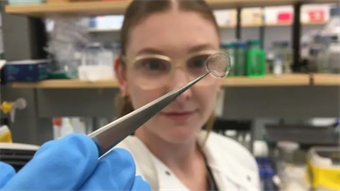
A laser was applied to form a gut-shaped template within a hydrogel housed in a microfluidic channel. Structures within the hydrogel scaffold simulated those found in the intestine and guided stem cells into the 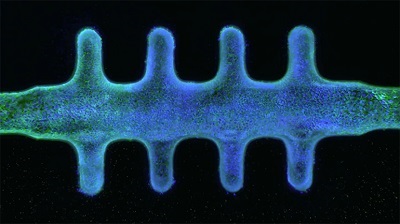 A mini intestine on a chip closely mimics the morphology and cellular composition of the small intestine. Source: EPFLdesired tissue arrangement. The seeded stem cells produced the differentiated cell types found in intestinal tissues and formed mini-gut tubes.
The synthesized mini-intestines were observed to possess some of the same functional features as their in vivo counterparts. These organoids allowed for the high cell turnover mechanism common to intestinal tissue, demonstrating continuous removal of dead cells to prolong tissue lifespan. The tubes can also be colonized with micro-organisms for modeling host–micro-organism interactions.
The new organoid growth technology could be useful for advancing personalized medicine, drug screening and development of new tissues and organs in the laboratory for use in regenerative medicine.