New membrane to benefit electrolytic hydrogen production
S. Himmelstein | June 30, 2020The sustainable production of hydrogen is dependent on the use of low-cost renewable energy and efficient process components to drive the electrolysis process. A new membrane developed by Evonik under the EU-funded cost-efficient hydrogen production unit based on anion exchange membrane electrolysis (CHANNEL) initiative promises to improve the economics and performance of anion exchange membrane (AEM) electrolysis systems.
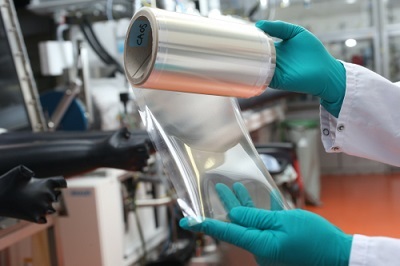 The polymer chemistry behind the innovative membrane is key to efficient water electrolysis. Source: EvonikAEM systems can potentially combine the beneficial features of proton exchange membrane electrolysis and alkaline electrolyzer technologies, such as low cost, raw materials that do not raise concerns in terms of supply bottlenecks and a compact design. The technology is currently limited by membranes with insufficient ionic conductivity and poor thermal stability.
The new membrane alleviates some of these performance barriers by use of a widely available, highly conductive and resistant polymer. Its inclusion in AEM systems is expected to offer high current density, efficiency and flexibility without reliance on precious metals.
Membrane electrode assemblies, catalysts and additional AEM system components are being developed by other participants in the three-year CHANNEL project, including Shell (Netherlands), Enapter (Italy) and Forschungszentrum Jülich (Germany).