Study finds Ohio hyperloop could create $300 billion in economic benefits
Peter Brown | June 05, 2020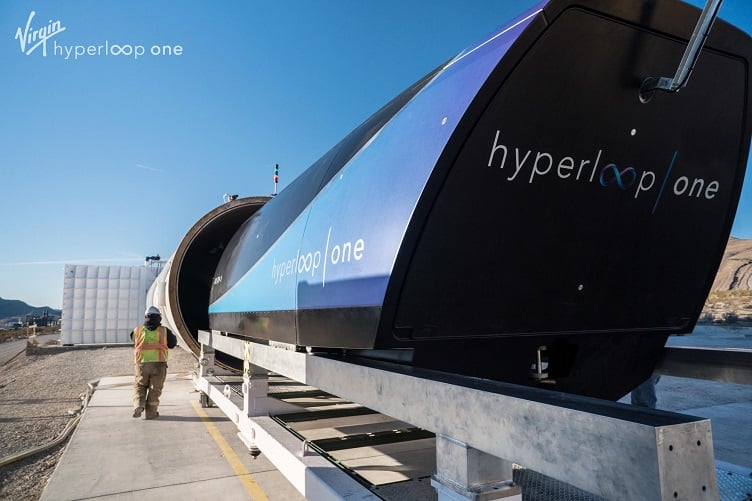 Virgin Hyperloop One has been helping with the study for an Ohio based hyperloop that would connect Columbus, Chicago and Pittsburgh. Source: Virigin Hyperloop One
The Mid-Ohio Regional Planning Commission (MORPC) found that a hyperloop system in the state could generate $300 billion in overall economic revenue and reduce CO2 emissions by 2.4 million tons.
The study was conduced by MORPC’s Rapid Speed Transportation Initiative (RSTI) to determine the opportunities for development of the hyperloop as well as new opportunities that would be created for businesses and people in the Midwest megaregion.
The hyperloop could run between Columbus, Chicago and Pittsburgh and the study found that the hyperloop would connect Chicago and Columbus in under 45 minutes with a estimated ticket price of $60. A trip from Columbus to Pittsburgh would take 30 minutes costing about $33 per ticket.
“Hyperloop is fundamentally about more than just getting from A to B quickly,” said Jay Walder, CEO of Virgin Hyperloop One, a company developing hyperloops and also involved in the study. “It’s about the enormous benefits — the economic uplift, the job creation, the emission reductions and the opportunity to fundamentally change the way people live and work.”
The study examined the feasibility of hyperloop in terms of analyzing route alignments, comparative costs, engineering complexity, public right of ways, environmental constraints, ridership volumes and travel behavior.
MORPC plans to create travel and economic demand advisory panels to refine high-level analyses. It also plans to advance regulatory framework for hyperloop technology that would help develop faster speeds and turning as well as a national framework for safety.
Virgin Hyperloop One has been one of the leading vendors trying to enable what it calls a “fifth mode of transportation” and is exploring ten states with potential hubs for hyperloops in the U.S. It is also building facilities in Europe, specifically Spain, and India to test the feasibility of the transportation in these countries.