Engineers develop a method for powering electronic devices with sweat
Marie Donlon | May 20, 2020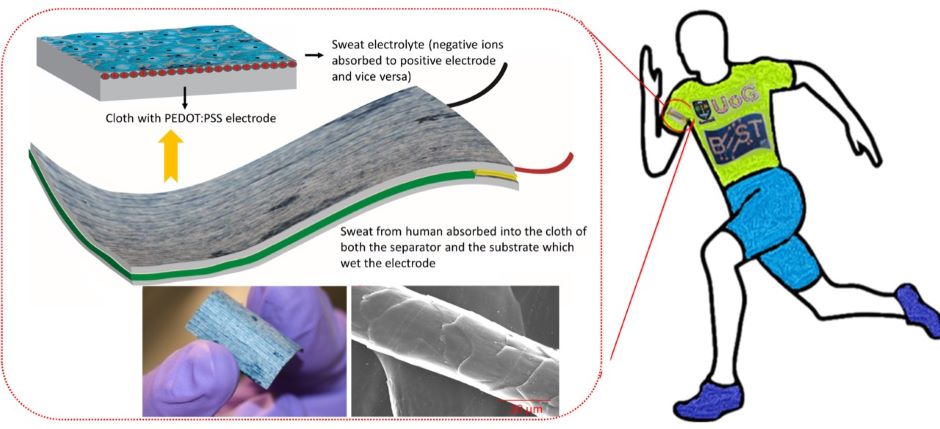 Source: University of GlasgowEngineers at Scotland’s University of Glasgow have developed a flexible supercapacitor with the potential for replacing electrolytes in conventional batteries with human sweat.
To accomplish this, the engineers coated highly absorbent polyester cellulose cloth in a layer of poly(3,4-ethylenedioxythiophene) polystyrene sulfonate, otherwise known as PEDOT:PSS, which behaves as the supercapacitor’s electrode.
The coated cellulose cloth absorbs the wearer’s sweat wherein the sweat’s positive and negative ions merge with the polymer surface of the capacitor, thereby encouraging an electromechanical reaction that produces energy.
To test the new flexible capacitors, volunteers were outfitted with 2 cm x 2 cm cell iterations of the device and required to run on treadmills where they produced sweat enough to generate roughly 10 milliwatts of power.
According to the engineers, the flexible supercapacitors can be fully charged with 20 microliters of fluid.
The research appears in Advanced Materials.