
Microwaving plastic waste yields battery components
S. Himmelstein | April 28, 2020A sustainable approach to the manufacture of anode materials for batteries is being advanced at Purdue 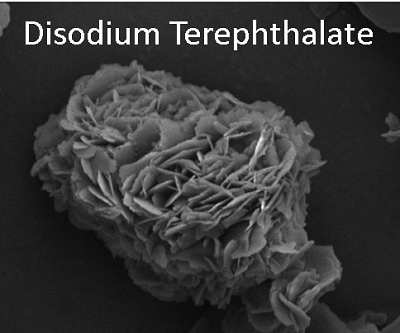 The new material is derived from polyethylene terephthalate via microwave processing in two minutes. Source: Purdue UniversityUniversity. An ultrafast microwave irradiation process is used to upcycle waste polyethylene terephthalate (PET), a widely recycled polymer, to form disodium terephthalate as the base material for the battery component.
Anode material for lithium-ion and sodium batteries was derived from PET flakes in a two-minute irradiation treatment. The phase and chemical purity of the synthesized disodium terephthalate was confirmed by X-ray diffraction, Fourier-transform infrared spectroscopy and nuclear magnetic resonance spectroscopy.
When tested in lithium-ion batteries, the material delivered a discharge capacity of 182 mAh/g at a 25 mA/g density after 50 cycles. A discharge capacity of 224 mAh/g in a sodium-ion device was documented under similar conditions.

There are many uses for recycled PET. Can you justify this one by showing less energy used compared to what's used now, or some other significant advantage? Just saying it's made from recycle may sound good to the general public and even the financial world, but it shouldn't cost the environment more than it helps. I'm concerned about breaking bonds in the polymer and disposal of the glycol part.