Study: Formulating new antibiotics with metals
S. Himmelstein | March 03, 2020The search for new, effective antimicrobial agents in light of increasing resistance to available antibiotics may lead to the medicinal use of metals. An international team of researchers has identified 23 previously unexplored compounds containing silver, manganese, zinc and other metals that have antibacterial and antifungal activity.
The use of metals for pharmaceutical purposes is not new, as platinum has formed the basis of some cancer chemotherapy protocols and mercury has long served as a component of topical antiseptics and as a vaccine preservative. The antibacterial properties of metal complexes are just beginning to be explored: The researchers evaluated 906 metal-containing compounds previously screened by the Community for Open 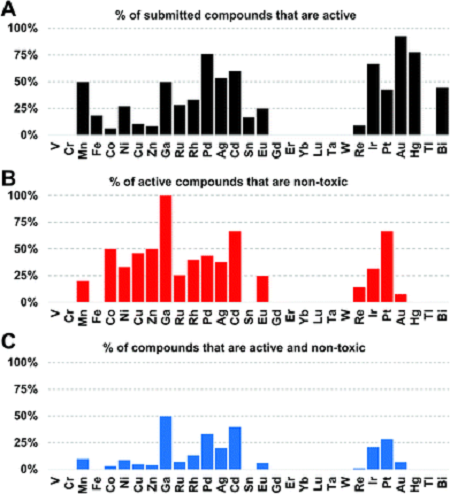 (A) Percentage of submitted compounds found to be active, classified by element. (B) Percentage of submitted compounds found to be active and ‘non-toxic,’ classified by compounds per element that are also non-toxic. (C) Overall success-rate of compounds, classified by element. Source: Angelo Frei et al.Antimicrobial Drug Discovery.
Selected compounds were tested with pathogens associated with growing multidrug resistance, including Enterococcus faecium, Staphylococcus aureus and Klebsiella pneumoniae. Thirty compounds containing manganese, cobalt, zinc, ruthenium, silver, europium, iridium and platinum were observed to exert activity against Gram-positive and/or Gram-negative bacteria.
Metal-based complexes displayed a higher hit-rate against critical pathogens and fungi when compared to the solely organic compounds. Gallium, palladium, silver, cadmium, iridium and platinum showed the highest overall success rate. A silver complex displayed the best broad-spectrum activity, with moderate minimum inhibitory concentrations against all tested strains and no cytotoxicity and/or hemolysis.
Scientists from the University of Queensland, the University of Leeds (U.K.), the University of Sydney, University College London, the University of Western Australia, Karlsruhe Institute of Technology (Germany), the University of Warwick (U.K.), Le Mans Université (France), Cornell University, Cairo University and Curtin University (Australia) contributed to this research, which is published in Chemical Science.