
Weapons maker, US SOCOM develop underwater bullets
Marie Donlon | December 02, 2019W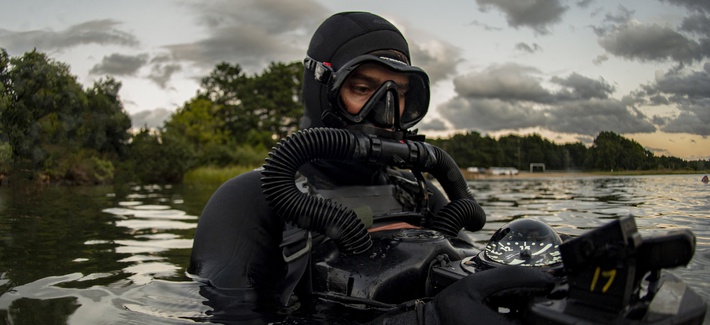 Source: Jayme Pastoriceapons manufacturer DSG Technologies in conjunction with U.S. Special Operations Command (SOCOM) has developed a bullet that can travel underwater.
The tungsten-tipped CAV-X bullets are modified bullets encased in a gas bubble that enables the bullets to travel through water as swiftly as bullets travel through air.
To achieve this effect, the team turned to a process called supercavitation that has already been applied to propellers and torpedoes. Cavitation cuts down on the friction and drag of an object, thereby allowing the object to achieve greater speeds.
Bullets do not work in underwater scenarios because water is much denser than air, thereby reducing the bullet’s momentum. This makes military underwater operations and missions virtually impossible.
The underwater bullets are currently undergoing trials held by SOCOM. So far, the bullets have been successfully fired through blocks of ballistics gelatin to mimic an underwater environment. Eventually, the SOCOM team will test the bullets by firing them from underwater toward the water’s surface.
In addition to the underwater bullets, DSG Technologies is also attempting to develop bullets that can penetrate sand bags, body armor and 2 cm of steel.
To see the underwater bullets pass through the gelatin bricks, watch the accompanying video.


"... This makes military underwater operations and missions virtually impossible. .."
This comes as quite a surprise to someone having be a part of US submarine service.
The cardboard target indicates the projectile struck it sideways. I could not determine viewing the video if the projectile was tumbling before entering the gel nor while traveling through the gel.
In reply to #2
Based on the tracks through the gelatin, it appears the projectile was flying stable through then entire first portion. It wasn't until it exited the first and entered the second segment that the tracks noticeably curve.
Perhaps the exit from the end of the first segment was not square, or maybe that red material before the second segment altered the path.
I doubt the projectile could have made it through so much gelatin in such a straight path had it been tumbling early.
It is interesting,... when you hear stories from D-Day, that your difference between life and death, was a matter of inches of water while hitting Omaha beach.