Study: Wearable sensors could prevent stillborn births
Marie Donlon | August 08, 2019 Researchers at Steven’s Institute of Technology in New Jersey have created a safe, non-invasive device permits expectant parents to hear their baby’s heartbeat whenever they want.
This has the potential for being more accurate than current fetal heart-rate monitors, and could prevent stillborn births. Using the same commercial, orientation-detection sensors as those in smartphones, the device records heartbeat vibrations emitting from the mother’s abdomen, or whenever the baby moves about.
Researchers believe the device has the potential for reducing the number of stillborn births each year worldwide, which currently stands at roughly 2.6 million. Often, stillborn births follow variations in fetal heart rate and movement. Incorporated into a portable device, the sensors could be worn throughout the final days and weeks of pregnancy, ensuring that any signs of distress from the fetus would alert the parents and attract medical attention.
"Almost a third of stillbirths occur in the absence of complicating factors," said Negar Tavassolian, an associate professor who led the work at Stevens. "Our device could let a pregnant woman know if her fetus is compromised and she needs to go to the doctor."
The sensor’s developers conducted experiments on 10 expectant women. During testing, the team determined that they could detect fetal heart rate with roughly the same accuracy as fetal cardiotocograms (f-CTG), largely the standard for fetal monitoring, which measures the baby’s heart electrical activity (ECG) along with the mother’s uterine contractions. To overcome the challenge of capturing the fetal heartbeat masked by the sounds and movements of the baby’s mother, the researchers combined signals captured by three different sensors and employed algorithms to isolate the fetal heartbeat.
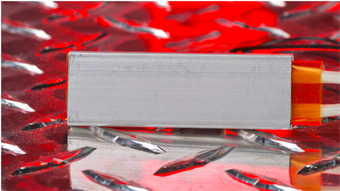
Size and battery life are key advantages of the device over ECG or Doppler ultrasound tools, which tend to be bulky and operate on a roughly four-hour battery life. The Steven’s sensors are smaller than 0.2 in long, and run off of a 3 V battery for more than 24 hours at a time. Additionally, the Steven’s device does not risk the health of the fetus, which is a concern plaguing ultrasound monitors, as they can potentially heat tissue if used for prolonged periods of time. The sensors only detect existing vibrations, working much like a doctor listening through a stethoscope.
Likewise, the device reportedly offers objective measurement of fetal movement, whereas current methods for assessing fetal movement involve the mother timing the frequency of their baby’s kicks. Researchers believe that combining heart-rate and movement data measurements will offer critical insights into fetal health beyond what is currently available, eventually fusing two modalities into one device.
An article detailing the device appears in the IEEE Sensors Journal.