A spotlight on MECO EA Type-2 seals
July 11, 2019When industrial manufacturing demands that chemicals, solvents, plastics and other external contaminants must not spoil the batch under process, custom-engineered shaft seals designed by MECO Seals eliminate the risk.
Whether the application involves large solvent extractors, pressurized conveyors, holding tanks or other rotating equipment, fitments for blenders, dryers and sigma mixers, or rotating shafts that require an inert gas barrier, the MECO EA Type-2 model represents an ideal choice for the application. Designed for use in low-to-moderate shaft speeds on small-to-large shaft diameters, the EA Type-2 uses full-contact, soft-face mechanical shaft-sealing technology, sized for OEMs and custom in-house process equipment.
The EA Type-2 model provides the superior performance, durability, workmanship and service that is the basis of MECO’s reputation worldwide.
EA Type-2 seal operation
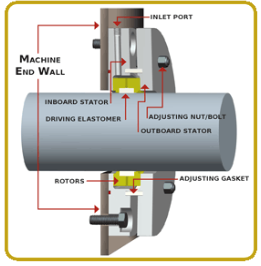 Figure 1. An adjusting gasket permits the distance between the two stator housings to be varied, maintaining a barrier fluid within the seal. Source: MECO Seals
The EA Type-2 seal model replaces standard stuffing boxes and packing glands, and incorporates separate inboard and outboard stator housings to act as the stationary seal faces. A rotating seal face assembly resides between the stators, and it consists of two replaceable rotors and a drive elastomer. The stators are drawn together, compressing the two seal rotors against a central driving elastomer. The elastomer and rotors interlock to the shaft, forming an airtight and watertight seal. The low-friction rotating seal faces are at right angles to the shaft, in full contact with the stationary seal faces.
The EA Type-2 seal cavity is charged with low-pressure air or an inert gas, acting as a barrier fluid for pneumatic seal face loading. This is a simple and effective way to check installation integrity and monitor seal performance.
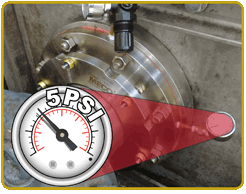 Figure 2. Low-pressure air acts as a barrier fluid for pneumatic seal face loading. Source: MECO Shaft SealsThe EA Type-2 seals are manufactured to exacting standards, which ensures parallelism and flatness to maximize product containment and minimize barrier gas consumption. They feature excellent resistance to heat and chemical degradation and have high mechanical strength and pressure resistance. Steel seals are ideal for online leak repairs as they contain steel fibers that provide a damming action to plug the leak.
Maintenance for EA Type-2 seals
Diagnostics is easily performed on the EA Type-2 seal model via the barrier fluid used to pneumatically load the rotating seal faces. The fluid also acts as a diagnostic tool. A pressure regulator is provided with the seal to set inlet seal cavity pressure and a pressure gauge is attached to the inboard stator to monitor seal cavity pressure.
Assembly bolts or studs link the stators and seal face loading is generated by controlling the distance between stators while monitoring seal cavity pressure. Over time, wear will cause a reduction in pressure. Using the assembly bolts to re-position the outboard stator resets the rotating seal faces and increases seal-cavity pressure. Over time, when the seal cavity pressure can no longer be maintained, the rotors and driving elastomer may be replaced with fully split components.
Seal dimensions
To deliver the best possible results, the MECO EA Type-2 seal model is custom-designed and built-to-order. Typical assemblies are fully split and shaft diameters range from 25 mm to 500 mm, with all sizes in between.
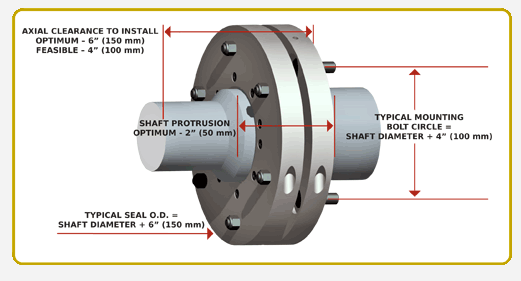 Figure 3: Typical dimensions used regarding shaft diameter, protrusion and axial clearance. Source: MECO Shaft Seals
While dimensions vary based on application, typical dimensions are shown in Figure 3. Planning for extra axial space is always helpful. EA Type-2 seals are designed for most OEM-specified mounting arrangements and are designer-friendly for easy interface with customized, in-house process equipment requirements. Seals can be built to either Society of Automotive Engineers (SAE) standards or metric dimensions.
Construction materials
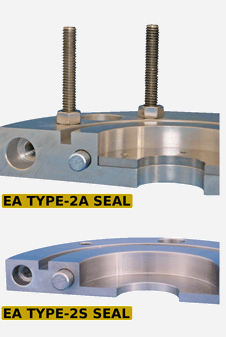 Two common rotor seal face options are a high-performance, bearing-grade, polymer-filled PTFE with FDA approval, or glass-filled PTFE. Elastomer options include silicone, Viton, EPDM and nitrile, all featuring FDA-compliant options. Source: MECO Shaft Seals
The MECO EA Type-2 seal’s rugged components are designed for long life. Two different housing and stator combinations are available. The EA Type-2A consists of aluminum housings with replaceable 300-series stainless steel stators. The EA Type-2S uses integral 300-series stainless steel stators. Hardened stainless steel is also an option for both stator configurations.
Key EA Type-2 seal applications
This model is typically used on horizontal, inclined or vertical shafts and configured for a fully split installation and on rotating shafts, where an inert gas barrier in the seal chamber is beneficial. The seal is adjustable without having to empty the process material.
The MECO EA Type-2 seal model is ideal for applications such as large solvent extractors, pressurized conveyors, holding tanks and similar rotating equipment, blenders, dryers and sigma mixers. Industrial uses include plastics, oilseed processors, chemicals, carbon anodes, metals, pharmaceuticals and food processors. Vacuum service and steady-state applications with infrequent thermal expansion or pressure changes are also common applications.
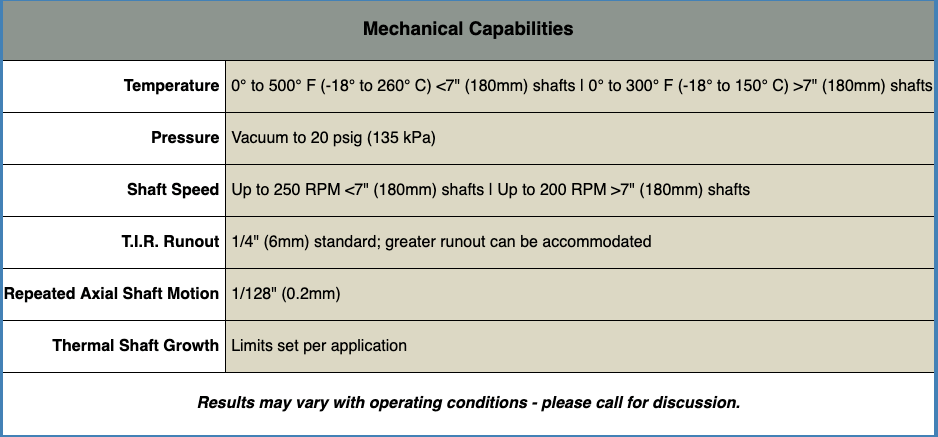 Table 1. Specifications for MECO EA Type-2 seals. Source: MECO Shaft Seals
Contact MECO Shaft Seals
To begin collaboration for a custom EA Type-2 seal for a specific application, visit MECO or call 1-800-526-8800.