A greener route to blue dye production
S. Himmelstein | June 23, 2019The production of synthetic blue dye used to color denim and other textiles, which results in the generation of hazardous waste, might be replaced with a more environmentally sustainable dye manufacturing platform 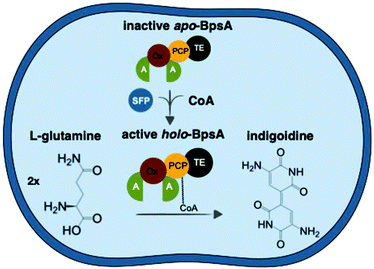 The fungus R. toruloides was genetically engineered to produce the blue pigment indigoidine. Source: M. Wehrs et al.based on fungal enzymes.
An international research team examined the potential of the fungi Rhodosporidium toruloides to express nonribosomal peptide synthetase (NRPS) enzymes after inserting a bacterial NRPS into its genome. An NRPS was selected that converts two amino acid molecules into indigoidine — a blue pigment — to make it easy to tell if the strain engineering was successful. The culture did indeed turn blue, signaling the effective use of microbial hosts for sustainable dye production.
Cultivation with sorghum lignocellulosic biomass resulted in an average titer of 86 grams of indigoidine per liter of bioreactor culture. The approach developed by researchers from Lawrence Berkeley National Laboratory, Universität Braunschweig (Germany), Sandia National Laboratories, University of California Berkeley, Technical University of Denmark and Shenzhen Institutes for Advanced Technologies (China) could be used for the industrially relevant, sustainable, high-titer production of this promising dye candidate. A research paper is published in Green Chemistry.